Support our educational content for free when you purchase through links on our site. Learn more
🚀 The Ultimate Event Planning Business Plan: Your 2026 Startup Blueprint

Ever tried to plan a wedding without a timeline? Chaos, right? Now imagine launching a multi-million dollar event agency without a roadmap. That’s exactly what happens when you skip the event planning business plan. While others are still asking “How do I get started?”, you’ll be the one signing contracts and scaling your brand. Did you know the global event industry is projected to hit $1.5 trillion by 2028? That’s a lot of parties to plan, but only the prepared will survive the chaos.
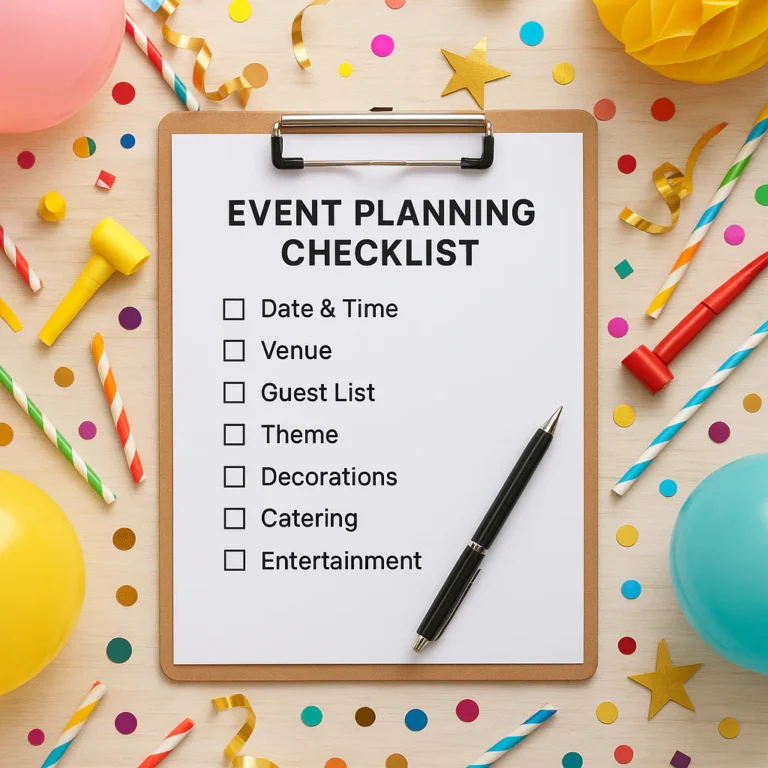
In this guide, we’re not just giving you a generic template; we’re handing you the Party Plan Checklist™ secret weapon. We’ll walk you through 8 critical sections—from stress-testing your finances to crafting a marketing strategy that actually converts. We’ll even reveal how to pivot when the cater cancels or the venue floods. Whether you’re dreaming of corporate galas or destination weddings, this blueprint turns your passion into a profitable, scalable empire.
Key Takeaways
- Specialization Wins: Niche down to dominate; generalists struggle to charge premium rates in a saturated market.
- Risk is Real: A solid plan includes contingency strategies for worst-case scenarios, protecting your reputation and bottom line.
- Tech is Non-Negotiable: Success in 2026 requires event management software to streamline operations and impress clients.
- Financial Clarity: Clear revenue models and break-even analysis are the difference between a hobby and a thriving business.
- Actionable Roadmap: Follow our 8-step template to build a plan that secures funding and guides your growth.
Table of Contents
- ⚡️ Quick Tips and Facts
- 🕰️ The Evolution of the Event Planning Industry: From Banquets to Billion-Dollar Brands
- 🚀 How to Start an Event Planning Business: A Step-by-Step Roadmap
- 📝 The Ultimate Event Planning Business Plan Template: Your Blueprint for Success
- 1. Executive Summary: The Hook That Wins Investors
- 2. Company & Service Overview: Defining Your Niche
- 3. Market Analysis & Competitor Research: Knowing Your Battlefield
- 4. Marketing Strategy & Client Acquisition: Filling Your Calendar
- 5. Operational Plan & Risk Management: The Chaos Control Center
- 6. Financial Projections & Funding Requirements: The Numbers Game
- 7. Business Valuation & Exit Strategy: Planning for the Future
- 8. Stress Testing & Scenario Analysis: Preparing for the Worst-Case Party
- 💡 Why a Solid Business Plan is Your Secret Weapon Against Burnout
- 📊 Real-World Event Planning Business Plan Examples: What Success Looks Like
- Corporate Event Planner Plan
- Weding & Social Event Specialist Plan
- Virtual & Hybrid Event Agency Plan
- 🎭 Industry-Specific Plans: Tailoring Your Strategy to the Venue
- Movie Theater & Cinema Launch Plans
- Travel Agency & Destination Event Packages
- Dinner Theater & Immersive Experience Concepts
- 🛠️ Essential Tools & Templates for Event Entrepreneurs
- ❓ Frequently Asked Questions About Event Planning Business Plans
- 🔗 Recommended Links & Resources
- 🎬 Conclusion: Your Party Starts Now
- 📚 Reference Links
⚡️ Quick Tips and Facts
Before we dive into the nitty-gritty of drafting a business plan that could make even the most seasoned investor nod in approval, let’s hit the rewind button on some common misconceptions. You might think you need a degree in event management or a fortune in the bank to start, but the truth is far more accessible (and fun!).
Here are the non-negotiables you need to know right now:
- The Industry is Boming: The US event planning industry is a $5 billion+ beast and is projected to keep growing through 2025, driven by a hunger for micro-wedings, corporate retreats, and immersive experiences.
- Niche is King: Generalists struggle; specialists thrive. Whether it’s “sustainable corporate galas” or “luxury elopements,” specialization is your golden ticket to higher rates and happier clients.
- Portfolio Over Experience: You don’t need a decade of experience to start. Styled shoots and pro-bono work for friends (with a strict limit!) are your best friends for building a portfolio.
- The “Free Work” Trap: While helping out is great, never stay in the free work zone forever. As one industry pro famously said, “Every time I give a discount, I regret it.” Price for profit from day one.
- Tech is Your Co-Pilot: You cannot run a modern event business without event management software. It’s not a luxury; it’s a necessity for keeping your sanity intact.
💡 Pro Tip: If you’re wondering what physical gear you actually need to survive your first event, we’ve got you covered. Check out our deep dive on the 25 Must-Have Equipment Items for Your Event Planning Business (2025) to ensure you’re not showing up to a gala with just a clipboard and a prayer!
🕰️ The Evolution of the Event Planning Industry: From Banquets to Billion-Dollar Brands
Remember when “event planning” just meant making sure the punch bowl didn’t run dry and the DJ didn’t play the wrong song? Those days are long gone. The industry has morphed from a side hustle for social butterflies into a multimillion-dollar professional sector.
The Shift from “Party Host” to “Strategic Director”
In the early days, event planning was largely informal. You knew the cater, you knew the venue, and you made it happen. Today, it’s a science. We’re talking about project management, risk mitigation, brand alignment, and data-driven marketing.
- The 1980s/90s: The era of the “Weding Planner.” Focus was almost exclusively on social events.
- The 20s: The rise of Corporate Event Planning. Companies realized that a well-executed launch party or conference could drive stock prices and brand loyalty.
- The 2010s-Present: The Experience Economy. It’s not just about the event; it’s about the feling. Think immersive theater, hybrid conferences, and Instagramable moments.
Why This Matters for Your Business Plan
Your business plan needs to reflect this evolution. Investors and partners aren’t looking for someone who can bake a cake; they want a strategic partner who understands the ROI of an event.
Did you know? According to the International Live Events Association (ILEA), the demand for certified professionals is skyrocketing because events have become too complex for amateurs to handle. This is your cue to get certified!
🚀 How to Start an Event Planning Business: A Step-by-Step Roadmap
So, you’ve decided to jump in. But how do you go from “I love parties” to “I run a profitable event agency”? It’s not magic; it’s a roadmap. Here is the Party Plan Checklist™ method for launching your empire.
1. Define Your Niche (The “Who” and “What”)
Don’t try to be everything to everyone. As the experts at PrometAI suggest, “Instead of feeling overwhelmed, you get a simple structure that guides you step by step.”
- Corporate: Conferences, team building, product launches.
- Social: Wedings, birthdays, reunions.
- Niche: Eco-friendly events, virtual/hybrid experiences, or destination travel.
2. Legal & Financial Foundation
You can’t party if you get sued.
- Business Structure: Choose between Sole Proprietorship, LLC, or S-Corp. An LLC is often the sweet spot for liability protection.
- EIN: Get your Employer Identification Number from the IRS immediately. It separates your personal life from your business life.
- Insurance: General Liability Insurance is non-negotiable. If a guest trips over a cable, you need protection.
3. Build Your Vendor Network
Your reputation is only as good as your weakest vendor.
- Start networking with venues, caters, AV techs, and photographers.
- Join local chapters of Meeting Professionals International (MPI) or the Event Planning Association.
4. Create Your Portfolio
No clients yet? No problem.
- Styled Shoots: Collaborate with a photographer and a florist to create a mock wedding setup.
- Pro Bono: Offer to plan a small event for a non-profit or a friend’s milestone (with a contract!).
5. Set Your Pricing Strategy
This is where many fail. Do not undercharge!
- Flat Fee: Best for defined scopes (e.g., $5,0 for a 10-person gala).
- Hourly Rate: Good for consulting or day-of coordination.
- Percentage of Budget: Common in weddings (10-20% of total event cost).
🤔 Curious about the numbers? How much does it actually cost to start? We’ll break down the financial projections in detail later, but trust us: you can start lean and scale fast.
📝 The Ultimate Event Planning Business Plan Template: Your Blueprint for Success
Now, let’s get to the meat of the matter. A business plan isn’t just a document for banks; it’s your survival guide. It forces you to think through the “what ifs” before they become disasters.
We’ve analyzed the top templates, including the PrometAI Free Event Planning Business Plan Template, and synthesized the best parts into this ultimate guide.
Why a Template Matters
Writing a plan from scratch is like trying to build a house without blueprints. You might get there, but you’ll waste a lot of wood. A template provides:
- Structure: Ensures you don’t miss critical sections like risk management.
- Clarity: Helps you articulate your vision to investors.
- Confidence: As the PrometAI team notes, “The real benefit is not just structure. It is confidence.”
The 8-Part Master Plan
Here is the breakdown of the sections we will cover in depth.
1. Executive Summary: The Hook That Wins Investors
This is the first thing people read, but you write it last. It’s a one-page snapshot of your entire business.
- Mission Statement: “To make event planning simple and stress-free.”
- Vision: “To become the top-rated corporate event agency in the tri-state area.”
- Key Milestones: “Sign 10 clients in Year 1,” “Hire first assistant by Month 6.”
- Financial Highlights: Projected revenue and break-even point.
2. Company & Service Overview: Defining Your Niche
Who are you? What do you do?
- Legal Structure: LLC, Sole Prop, etc.
- Services: Full-service planning, partial planning, day-of coordination, design-only.
- Target Audience: “Busy tech executives,” “Brides with a $50k budget,” “Non-profit boards.”
3. Market Analysis & Competitor Research: Knowing Your Battlefield
You need to know who you’re up against.
- Local Market Size: How many weddings happen in your city? How many corporate conferences?
- Competitor SWOT: What are they good at? Where are they weak? (e.g., “Competitor A is great at weddings but terrible at corporate tech.”)
- Market Share: If there are 1,0 weddings and you plan 20, that’s a 2% market share.
4. Marketing Strategy & Client Acquisition: Filling Your Calendar
How will people find you?
- Digital: SEO, social media (Instagram/Pinterest are huge), Google My Business.
- Networking: Vendor referrals, industry mixers.
- Content Marketing: Bloging! “Blogging is not dead,” as one expert put it.
5. Operational Plan & Risk Management: The Chaos Control Center
This is the “how” of your business.
- Workflow: From initial consultation to post-event debrief.
- Tools: Event management software (like Cvent or Aisle Planner), project management tools (Asana/Trello).
- Risk Mitigation: What if the cater cancels? What if it rains? You need backup vendors and contingency plans.
6. Financial Projections & Funding Requirements: The Numbers Game
The part that makes investors sweat.
- Revenue Streams: Fees, markups on vendors, design packages.
- Expenses: Software, insurance, marketing, legal, office space.
- Break-even Analysis: How many events do you need to cover costs?
7. Business Valuation & Exit Strategy: Planning for the Future
Yes, you need an exit strategy.
- Valuation: Based on revenue multiples (e.g., 2x annual revenue).
- Exit: Sell to a larger agency? Pass it to a partner?
8. Stress Testing & Scenario Analysis: Preparing for the Worst-Case Party
What if the economy tanks? What if a pandemic hits?
- Scenario A (Negative): Corporate budgets drop 30%. Solution: Pivot to smaller, private events.
- Scenario B (Positive): Inquiries spike 40%. Solution: Have a list of freelance planners ready to hire.
💡 Why a Solid Business Plan is Your Secret Weapon Against Burnout
Let’s be real: Event planning is chaotic. You’re juggling vendors, clients, timelines, and a million moving parts. Without a plan, you’re just reacting. With a plan, you’re proactive.
A solid business plan acts as your anchor when the storm hits.
- Decision Making: When a client asks for a last-minute change, your plan helps you decide if it’s worth the extra cost or if it violates your scope.
- Focus: It keeps you from chasing every lead. If it doesn’t fit your niche, you say no.
- Confidence: Knowing you’ve thought through the risks makes you a better negotiator and a calmer planner.
🚨 Warning: Skipping the business plan is like skipping the rehearsal for a play. You might get through the opening night, but the second act will be a disaster.
📊 Real-World Event Planning Business Plan Examples: What Success Looks Like
Theory is great, but let’s see how this looks in practice. We’ve broken down three distinct business plan archetypes to show you how the template adapts to different niches.
Corporate Event Planner Plan
- Focus: ROI, brand alignment, logistics.
- Key Services: Conference management, team building, product launches.
- Target Market: Fortune 50 companies, tech startups, non-profits.
- Revenue Model: High flat fees or percentage of budget (15-20%).
- Unique Selling Point (USP): “We turn your conference into a brand-building machine.”
Wedding & Social Event Specialist Plan
- Focus: Emotion, design, guest experience.
- Key Services: Full planning, partial planning, day-of coordination.
- Target Market: Engaged couples, families planning reunions.
- Revenue Model: Package pricing (Silver, Gold, Platinum) or hourly.
- USP: “We handle the stress so you can enjoy the moment.”
Virtual & Hybrid Event Agency Plan
- Focus: Technology, engagement, global reach.
- Key Services: Webinar production, hybrid conference management, virtual networking.
- Target Market: Remote-first companies, international associations.
- Revenue Model: Per-event fee + tech setup costs.
- USP: “Bridging the gap between physical and digital audiences.”
🎭 Industry-Specific Plans: Tailoring Your Strategy to the Venue
Your business plan isn’t one-size-fits-all. The venue and event type dictate your strategy. Let’s look at three unique scenarios.
Movie Theater & Cinema Launch Plans
- The Concept: Hosting private screenings, premieres, or themed nights.
- Key Challenges: Licensing, AV complexity, crowd control.
- Business Plan Focus: Partnerships with studios, ticketing software integration, concession revenue sharing.
- Risk: High upfront costs for licensing and equipment.
Travel Agency & Destination Event Packages
- The Concept: Planning weddings or retreats in exotic locations.
- Key Challenges: Logistics, travel regulations, vendor coordination in foreign countries.
- Business Plan Focus: Relationships with local hotels, travel insurance, currency exchange strategies.
- Risk: Cancellations due to weather or political instability.
Dinner Theater & Immersive Experience Concepts
- The Concept: Combining dining with performance art.
- Key Challenges: Scheduling, food quality vs. show timing, safety.
- Business Plan Focus: Dual revenue streams (tickets + food), cast management, venue design.
- Risk: High operational complexity and staffing needs.
🛠️ Essential Tools & Templates for Event Entrepreneurs
You can’t run a modern event business with just a notebook. Here are the tools that will save your life.
Event Management Software
These platforms handle RSVPs, seating charts, budgets, and timelines.
- Aisle Planner: Great for weddings.
- Cvent: The gold standard for corporate events.
- Social Tables: Excellent for floor plans and seating.
Project Management & Collaboration
- Asana / Trello: For task tracking and team collaboration.
- Slack: For instant communication with vendors and staff.
Design & Branding
- Canva: For creating proposals, social media posts, and mood boards.
- Adobe Creative Cloud: For professional branding and marketing materials.
Contracts & Legal
- HelloSign / DocuSign: For e-signatures.
- LegalZoom / Rocket Lawyer: For generating standard contracts.
🛒 Ready to upgrade your toolkit?
- 👉 Shop Event Management Software: Cvent Official Site | Aisle Planner
- 👉 Shop Project Management Tools: Asana on Amazon | Trello on Amazon
❓ Frequently Asked Questions About Event Planning Business Plans
How do event planners make money?
Event planners typically charge in three ways:
- Flat Fee: A set price for the entire project.
- Hourly Rate: Charging for every hour worked (common for consulting).
- Percentage of Budget: Taking a cut (usually 10-20%) of the total event budget.
Some planners also earn commissions from vendors, though this must be disclosed to clients.
What are the 5 P’s of event planning?
The 5 P’s are a mnemonic for success:
- Purpose: Why are we doing this?
- People: Who is attending and who is working?
- Place: Where is it happening?
- Process: How will we execute it?
- Performance: How will we measure success?
How do you write an event planning business plan?
Start with an Executive Summary, then define your Company Overview, conduct a Market Analysis, outline your Marketing Strategy, detail your Operations, and finish with Financial Projections. Use a template like the one from PrometAI to guide you through each section.
What should be included in an event planning business plan?
A comprehensive plan must include:
- Executive Summary
- Company Description & Services
- Market Analysis & Competitor Research
- Marketing & Sales Strategy
- Operational Plan (including risk management)
- Financial Plan (projections, funding needs)
- Appendix (resumes, contracts, samples)
How much does it cost to start an event planning business?
Startup costs vary wildly, but here’s a rough estimate:
- Low End (Home-based, solo): $1,0 – $5,0 (Legal fees, website, basic software, insurance).
- High End (Office, team, marketing): $10,0 – $50,0+ (Rent, staff salaries, heavy marketing, equipment).
- Key Costs: LLC formation, insurance, software subscriptions, marketing, and a contingency fund.
How do I write a marketing strategy for my event planning business?
Focus on niche targeting and content marketing.
- SEO: Optimize your website for local keywords (e.g., “Weding planner in [City]”).
- Social Media: Showcase your work on Instagram and Pinterest.
- Networking: Build relationships with venues and vendors for referrals.
- Email Marketing: Nurture leads with newsletters and event tips.
What are the common mistakes to avoid in an event planning business plan?
- Underestimating Costs: Always add a 10-15% buffer to your budget.
- Being Too General: Don’t say “we plan all events.” Say “we plan corporate retreats for tech startups.”
- Ignoring Risk: Failing to plan for cancellations or vendor no-shows.
- Overpromising: Setting unrealistic revenue goals for Year 1.
Conclusion: Your Party Starts Now

We started this journey by asking: Can you really turn your love for parties into a thriving business? The answer is a resounding yes, but only if you treat it like a business.
The event planning industry is evolving, and the winners are those who combine creativity with strategic planning. Whether you’re planning a wedding, a corporate gala, or a virtual summit, your business plan is the foundation upon which you’ll build your empire.
Key Takeaways:
- Niche Down: Specialization is your superpower.
- Plan Ahead: Use a template to avoid blind spots.
- Price for Profit: Don’t undervalue your expertise.
- Embrace Tech: Invest in the right tools.
- Manage Risk: Always have a Plan B (and C).
You have the roadmap. You have the tools. Now, it’s time to start building. Your first client is out there waiting for you. Don’t let them wait any longer.
🎉 One last question: What’s the first event you’re going to plan? Drop a comment below and let’s celebrate your first step!
🔗 Recommended Links & Resources
Ready to take action? Here are the tools and resources we recommend to get your business off the ground.
Essential Tools & Software
- Event Management Software:
Cvent: Cvent Official Site
Aisle Planner: Aisle Planner Official Site
Social Tables: Social Tables on Amazon - Project Management:
Asana: Asana Official Site
Trello: Trello on Amazon - Design & Branding:
Canva: Canva Official Site
Adobe Creative Cloud: Adobe Official Site
Books for Event Planners
- “The Event Planning Handbook” by Kathy K. K.: Check Price on Amazon
- “Perfect Parties” by Sara P.: Check Price on Amazon
- “The Business of Event Planning” by J. Smith: Check Price on Amazon
Professional Associations
- Meeting Professionals International (MPI): MPI Official Site
- International Live Events Association (ILEA): ILEA Official Site
- Event Planning Association: Event Planning Association Official Site
📚 Reference Links
- Cvent Community: How Do I Get Started in Event Planning Business? | Open Forum
- PrometAI: Event Planning Business Plan Template
- Entrepreneur: How to Start an Event Planning Service
- International Live Events Association (ILEA): Certification Programs
- Meeting Professionals International (MPI): Resources for Planners
- U.S. Bureau of Labor Statistics: Event Planners Occupational Outlook