Support our educational content for free when you purchase through links on our site. Learn more
Waterproof Hoverboard Covers for Off-Road Fun: 5 Options 🛹

Waterproof hoverboard covers for off-road fun can help protect a board’s exterior from dust, light splashes, and scuffs—but they do not make a hoverboard waterproof or safe to ride in the rain. Choose a cover that explicitly fits your model, clears the wheels and sensors, and is designed to stay on while riding; use transport bags only for carrying or storage.
The confusing part? “Waterproof” appears on plenty of product listings, but that word alone doesn’t tell you how a cover was tested—or whether it fits a rugged board with larger wheels. We’ve seen a decorative skin hide a charging port just when someone needed it, so our rule is simple: test the fit before the ride, not when the trail is calling.
Key Takeaways
- A cover protects surfaces, not electronics. Check the hoverboard manufacturer’s water-use guidance and IP rating; a cover does not upgrade either.
- Fit matters more than “universal” claims. Confirm your exact board model, measurements, wheel clearance, and access to lights, sensors, vents, and ports.
- Separate riding covers from transport covers. A bag or carrier should come off before the board is powered on.
- Inspect and clean after every off-road ride. Remove grit gently, follow the manufacturer’s cleaning instructions, and dry the cover and board fully before storage.
- Compare the silicone cover listing from Monster Scooter Parts, but verify compatibility and intended use with the seller before ordering.
Table of Contents
- ⚡ Quick Tips and Facts: Waterproof Hoverboard Covers for Off-Road Fun
- 🏁 Quick Answer: What a Hoverboard Cover Can—and Can’t—Do
- 🌧️ Background: Hoverboard Covers, Weather Resistance, and Off-Road Riding
- Waterproof, water-resistant, and splashproof: what’s the difference?
- Why rugged tires and an IP rating matter more than a cover
- 🛡️ Why Your Hoverboard Needs a Cover for Trail Riding
- Protection from mud, dust, scratches, and flying gravel
- When a cover can interfere with cooling, sensors, or safe riding
- 🔎 Top 5 Hoverboard Cover Options for Off-Road Fun (2026)
- 1. Universal silicone full-body skin cover
- 2. Model-specific hard-shell hoverboard cover
- 3. Heavy-duty removable mud and dust guard
- 4. Waterproof hoverboard storage and transport cover
- 5. Custom vinyl wrap for scratch protection
- 📊 Top Cover Styles at a Glance: Quick Comparison
- 🧪 Deep Feature Comparison: Fit, Coverage, Ventilation, and Trail Readiness
- 🧭 How to Choose the Right Waterproof Hoverboard Cover
- Step 1: Match the cover to your hoverboard model and wheel size
- Step 2: Decide whether you need ride protection or storage protection
- Step 3: Check material, seams, and water-resistance claims
- Step 4: Verify wheel, sensor, charging-port, and cooling cutouts
- Step 5: Consider grip, visibility, and ease of cleaning
- 📏 Hoverboard Cover Fit Guide: Compatibility and Sizing
- How to measure your board before buying
- Will a hoverboard cover fit every model?
- Can a cover fit boards with fenders, lights, or Bluetooth speakers?
- 💧 Can You Ride a Hoverboard in Rain with a Waterproof Cover?
- Water exposure, puddles, and wet-trail risks
- How to check your hoverboard’s IP rating
- Why a cover does not make an unrated board waterproof
- 🧽 Cleaning and Maintaining a Hoverboard Cover After Off-Road Rides
- Removing mud, sand, and trail dust safely
- Drying and storing covers to prevent trapped moisture
- When to replace a torn or loose-fitting cover
- ⚠️ Common Hoverboard Cover Mistakes—and How to Fix Them
- 💡 Pro Tips for Safer, Cleaner Off-Road Hoverboarding
- ❓ Frequently Asked Questions
- Can I charge my hoverboard with its cover on?
- Will a cover slow down or overheat my hoverboard?
- How do I clean a waterproof hoverboard cover?
- Is a cover worth it for a budget hoverboard?
- Can I use a storage cover while riding?
- ✅ Final Buying Checklist for an Off-Road Hoverboard Cover
- 🏁 Conclusion
- 🔗 Recommended Links
- 📚 Reference Links
Smart app-controlled water-resistant hoverboards: 10 to compare 🛹 is a useful companion if you’re choosing the board itself. Here, we’re focusing on the less glamorous—but genuinely handy—sidekick: a hoverboard cover for off-road dust, splashes, and scuffs. One caveat up front: a cover is not a waterproofing upgrade for the electronics.
⚡ Quick Tips and Facts: Waterproof Hoverboard Covers for Off-Road Fun
| Quick fact | What it means for you |
|---|---|
| “Waterproof” is not a universal, verified standard on hoverboard covers. | Look for documented material and seam details, and distinguish a riding cover from a storage or transport cover. |
| Fit beats stretch. | Check the cover maker’s compatible board models and wheel size. A cover meant for a standard 6.5-inch board may not fit an 8- or 10-inch all-terain model. |
| Covers can help with cosmetic protection. | A correctly fitted silicone skin or shell can reduce scratches and light scuffing. It does not make a board impact-proof. |
| Keep wheels, sensors, lights, vents, and controls clear. | Anything that interferes with movement, balance sensors, heat dissipation, or visibility should come off before riding. |
| A cover does not make a hoverboard safe in wet conditions. | Follow the board manufacturer’s water-exposure guidance and IP rating, if one is published. Avoid puddles and wet trails unless the manufacturer explicitly permits the conditions. |
| Dry both board and cover before storage. | Trapped moisture can linger against the casing and fittings. Wipe clean, dry thoroughly, and inspect before the next ride. |
Our short version: For off-road riding, prioritize a model-compatible, secure-fitting cover that leaves all moving and functional parts unobstructed. For transporting a board in rainy weather, use a separate water-resistant bag or carrier—and remove it before riding.
The first video embedded above, “✅The 5 BEST Offroad Hoverboards of 2026”, can help you compare all-terain board styles. It discusses boards such as the Gyror Warrior G2 and LIEAGLE All-Terrain Hoverboard, but it does not establish that any particular cover fits them.
🏁 Quick Answer: What a Hoverboard Cover Can—and Can’t—Do
A hoverboard cover can help guard the board’s exterior against scratches, dust, light splashes, and minor scuffs, depending on its design and fit. A silicone skin is usually a cosmetic and abrasion-protection accessory; a padded carrier is for storage or transport. Neither should be treated as a seal that makes the board waterproof.
| A cover may help with… | A cover does not guarantee… |
|---|---|
| Light surface scuffs and scratches | Safe riding in rain or through puddles |
| Dust and debris on covered casing areas | Protection of internal electronics from water |
| Minor contact marks from routine handling | Impact protection in a crash or fall |
| Keeping a board cleaner during transport, if it is a transport cover | Compatibility with every board or wheel size |
| Personalizing the board’s appearance | Unblocked vents, sensors, wheels, or controls |
Our recommendation: Buy by exact board model and dimensions—not just by the words “universal” or “waterproof.” If the seller does not explain fit, coverage, cutouts, and intended use, treat the claim cautiously. The U.S. Consumer Product Safety Commission (CPSC) advises riders to follow the manufacturer’s instructions and use appropriate protective equipment; a cover doesn’t replace either. CPSC hoverboard safety guidance.
🌧️ Background: Hoverboard Covers, Weather Resistance, and Off-Road Riding

Hoverboard covers are sold under a jumble of names: silicone skins, protective shells, bumper covers, waterproof cases, and transport bags. Those labels don’t all describe the same product. A thin silicone skin may protect the casing from abrasion, while a backpack-style carrier may help shield a board while it’s being carried or stored.
That distinction matters on trails. An off-road hoverboard can kick up dust and grit, but its larger wheels and fenders may make a standard cover incompatible. Before ordering, check the actual model’s dimensions and the cover’s stated fit. The same lesson applies when planning an activity: match the gear to the venue, just as we would when working through our event venue selection checklist.
Waterproof, water-resistant, and splashproof: what’s the difference?
These terms are often used casually in product listings. Water-resistant generally suggests some resistance to water exposure, while waterproof implies a stronger barrier—but a listing alone does not tell you how a product was tested. Look for a published rating, test method, or clear manufacturer instructions.
An IP rating, when supplied by the hoverboard manufacturer, describes protection of the device enclosure under specified conditions. It does not automatically describe a separately purchased cover. The International Electrotechnical Commission explains the IP Code and its rating system here.
- ✅ Do: Verify the board’s own water-resistance instructions and rating.
- ❌ Don’t: Assume a silicone skin or bag raises the board’s IP rating.
- ❌ Don’t: Infer “safe for rain” from a product title alone.
Why rugged tires and an IP rating matter more than a cover
A cover can protect surfaces; tires, ground clearance, construction, and the board’s stated water-exposure limits determine where the board is appropriate to ride. A rugged-looking tire does not prove the electronics are protected against water. Likewise, a cover that fits an ordinary board does not necessarily fit an all-terain one.
A quick fit check should include:
- The board’s exact model name and wheel size.
- Its width and height, including fenders or guards.
- The positions of lights, sensors, ports, switches, and vents.
- Whether the cover maker lists that exact model as compatible.
For a host planning a group ride, we also recommend checking the route surface and weather before guests arrive. That’s the hoverboard equivalent of a reliable birthday party checklist: prepare for the conditions, not the optimistic forecast in your group chat.
🛡️ Why Your Hoverboard Needs a Cover for Trail Riding
A cover can be worthwhile if your goal is fewer casing scuffs and easier cleanup. Off-road use tends to expose the board’s exterior to dirt, grit, and brush contact. But protection is only useful when the cover fits correctly and stays clear of the board’s functional parts.
Protection from mud, dust, scratches, and flying gravel
A close-fitting skin can reduce direct contact between the board casing and small abrasions. It may also make surface dirt easier to wipe off, depending on the material. It will not stop every stone, prevent cracking in a fall, or protect exposed areas that the cover does not reach.
Here’s our practical field test: after fitting a cover, roll the board slowly by hand while it’s powered off. Look for rubbing near the wheels and fenders. Then check each light, sensor, charging port, and control. If the cover shifts, catches, or blocks anything, it isn’t ready for a ride.
When a cover can interfere with cooling, sensors, or safe riding
A poorly designed or oversized cover may obstruct openings, rub on a tire, conceal lights, or make controls harder to reach. Those are not minor inconveniences on a self-balancing device. Follow the hoverboard manufacturer’s manual, especially for charging, operation, and maintenance; the CPSC also recommends using products according to their instructions. CPSC hoverboard safety guidance.
Remove the cover immediately if you notice unusual heat, a new rubbing sound, loose material near a wheel, impaired lights, or altered balance response. Stop riding and inspect the board rather than trying to “make it work.”
🔎 Top 5 Hoverboard Cover Options for Off-Road Fun (2026)
There isn’t enough consistent public product information to name five proven, waterproof, off-road-rated covers. In particular, the brands and listings below do not all publish verified water tests, fit charts, or all-terain compatibility. We’re comparing cover types and real listings carefully rather than calling a generic silicone skin a trail-tested rain shield.
| Option | Best suited to | Main advantage | Main limitation |
|---|---|---|---|
| Universal silicone full-body skin | Cosmetic protection on a compatible standard board | Flexible, removable, easy to clean | Fit and water protection are not guaranteed |
| Model-specific hard-shell cover | Board-specific casing protection | Potentialy secure fit | Must confirm exact model and clearance |
| Removable mud/dust guard | Limited debris protection, if designed for the model | Targets exposed areas | Can obstruct wheels or sensors if improvised |
| Water-resistant transport cover | Carrying or storing a board | Helps keep dirt and light moisture off while stored | Not for riding |
| Custom vinyl wrap | Appearance and light scratch protection | Lots of design options | Not a waterproof enclosure or impact guard |
1. Universal silicone full-body skin cover
Silicone covers are flexible and commonly sold in multiple colors. Monster Scooter Parts lists a Silicon Cover for Hoverboard Cases in multiple color options, but its listing does not establish a waterproof rating, off-road compatibility, fit dimensions, or performance specifications. Product listing.
Good for: Surface appearance and light casing protection when the product fits the exact board.
Watch out for: The listing’s name alone does not prove that it will fit an 8- or 10-inch all-terain board, cover every exposed surface, or make the board safe in rain.
- ✅ Check dimensions and cutouts with the seller before ordering.
- ❌ Don’t stretch a cover over a board it was not designed to fit.
- ❌ Don’t ride if it rubs on tires or blocks vents, lights, or sensors.
👉 Shop the listing: Monster Scooter Parts silicone hoverboard covers
2. Model-specific hard-shell hoverboard cover
A model-specific shell may provide a more predictable fit than a universal skin, but only when the manufacturer lists your board model. We found no verified basis to claim that a generic hard shell is waterproof or suitable for off-road riding.
Good for: Owners who can confirm the exact model match and want a structured casing guard.
Watch out for: Added bulk, poor clearance, or missing openings. Check the maker’s instructions and return policy before fitting it.
3. Heavy-duty removable mud and dust guard
A mud or dust guard is a useful idea only if it was designed for the board. A homemade flap or loose strap can catch against a moving wheel. Do not improvise guards near wheels, fenders, or balance sensors.
Good for: A purpose-built accessory with clear fit instructions and no interference.
Watch out for: We could not verify a widely specified, universal, off-road mud guard with published safety or fit testing. Treat broad claims carefully.
4. Waterproof hoverboard storage and transport cover
A transport cover can help contain dirt and protect a board while it is being carried or stored. It is a different category from a riding skin. The Hoverboard Carrier Backpack is described by its seller as a carrier for transporting a board; confirm its dimensions, construction, and care instructions directly before purchase.
Good for: Moving a dirty board in a car or storing it between rides.
Watch out for: Never ride with a backpack or storage bag fitted around the board. Remove it before powering on.
5. Custom vinyl wrap for scratch protection
A vinyl wrap can personalize a board and may protect the covered panels from light scuffs. It is not a waterproof cover, and adhesive can leave residue or complicate cleaning. Check whether the board maker permits wraps and keep all openings, labels, lights, sensors, and access panels uncovered.
Good for: Appearance and light abrasion protection.
Watch out for: Wraps do not absorb significant impacts or seal electronics from water.
📊 Top Cover Styles at a Glance: Quick Comparison
| Cover style | Ride with it? | Water protection claim to trust? | Fit priority | Our verdict |
|---|---|---|---|---|
| Silicone skin | Only if maker says it is for riding and it clears all parts | Do not assume | Exact model and wheel clearance | Best considered a casing skin |
| Hard-shell cover | Only if specifically intended for riding | Do not assume | Model-specific fit | Check clearances carefully |
| Mud/dust guard | Only if purpose-built for the board | Do not assume | Wheel and sensor clearance | Avoid improvised versions |
| Transport bag/backpack | No | Depends on product and test details | Board dimensions | Use only off the board |
| Vinyl wrap | Only if manufacturer permits it and all functions remain clear | No | Panel shape and openings | Cosmetic protection, not weather protection |
The competing guide at Hoverboards Guide cautions that covers can help with splashes but should not be treated as protection for immersion or storm riding. That is a sensible safety distinction, but its specific fit and performance claims should not be treated as universal without manufacturer documentation. Hoverboards Guide cover overview.
🧪 Deep Feature Comparison: Fit, Coverage, Ventilation, and Trail Readiness
| Feature to inspect | What to look for | Why it matters | Red flag |
|---|---|---|---|
| Model compatibility | Exact model or clear measurements | Prevents stretching, slipping, and rubbing | “Fits all hoverboards” without dimensions |
| Wheel clearance | No contact at any wheel position | Avoids snaging or abrasion | Material close to tire tread |
| Sensor and control openings | Accurate cutouts | Keeps balance functions and controls unobstructed | Covered sensors, power button, or charging port |
| Ventilation | Openings remain clear | Avoids trapping heat or blocking intended airflow | Fully enclosed casing with no manufacturer approval |
| Water claims | Test details or explicit manufacturer guidance | Clarifies the product’s actual limits | “Waterproof” with no supporting specification |
| Retention | Secure attachment without loose straps | Keeps material away from moving parts | Flapping edges or improvised ties |
| Cleaning | Manufacturer-approved care instructions | Helps remove grit without damaging material | Advice to use harsh solvents without material guidance |
Product rating snapshot: cover types, not unsupported waterproof claims
These editorial fit-for-purpose scores compare general cover categories; they are not laboratory test results or customer-review averages.
| Cover type | Design | Functionality | Fit confidence | Off-road usefulness | Water-protection confidence |
|---|---|---|---|---|---|
| Silicone skin, model fit confirmed | 7/10 | 6/10 | 7/10 | 5/10 | 2/10 |
| Model-specific shell, riding use confirmed | 7/10 | 7/10 | 8/10 | 6/10 | 2/10 |
| Purpose-built mud guard | 6/10 | 6/10 | 6/10 | 6/10 | 1/10 |
| Transport cover or carrier | 8/10 | 8/10 for carrying | 7/10 | 1/10 while riding | 5/10 for storage only |
| Vinyl wrap | 9/10 | 4/10 | 6/10 | 3/10 | 1/10 |
How to read the scores: A transport cover may score well for carrying but gets a low riding score because it is not meant to remain on an operating board. No category receives a strong water-protection score without verified product-specific evidence.
🧭 How to Choose the Right Waterproof Hoverboard Cover
Step 1: Match the cover to your hoverboard model and wheel size
- Find the board’s model name on its label, manual, or manufacturer page.
- Record the wheel size and board dimensions.
- Check whether the cover maker lists the exact model—not only a generic wheel class.
- Confirm the fender shape and clearance around each wheel.
- Ask the seller for measurements if the listing is unclear.
Some guides note that off-road boards commonly use larger wheels than standard models. That is a useful warning, not a universal specification for every board. Measure your board instead of relying on a broad “off-road” label.
Step 2: Decide whether you need ride protection or storage protection
Ask what job the accessory needs to do:
- During riding: A low-profile cover explicitly designed for that board and use; all openings and moving parts must remain clear.
- During carrying: A fitted transport bag or padded carrier, removed before riding.
- For appearance: A vinyl wrap or silicone skin, used only as directed.
- For wet-weather protection: Do not assume a cover makes riding safe. Follow the hoverboard maker’s water guidance.
This one question prevents the classic accessory mix-up: buying a bag for trail protection and then wondering why it flaps like a tiny parachute.
Step 3: Check material, seams, and water-resistance claims
Read the product page for material, seams, closure design, care instructions, compatibility, and any testing details. If a seller calls a cover “waterproof” but provides no rating or defined test conditions, treat the claim as unverified.
For the board itself, consult its manufacturer documentation. An IP rating applies to a device tested to a defined standard, not automatically to an accessory added afterward. IEC explanation of IP ratings.
Step 4: Verify wheel, sensor, charging-port, and cooling cutouts
Before riding:
- Switch the board off.
- Fit the cover according to its instructions.
- Check that wheels rotate freely and no edge can touch a tire.
- Confirm sensors, lights, controls, vents, and charging access are not blocked.
- Remove the cover if anything is loose, rubbing, or obscured.
Never charge a board while a cover or bag could trap heat or block access, unless the board and accessory manufacturers expressly permit that arrangement. Follow the board’s charging instructions.
Step 5: Consider grip, visibility, and ease of cleaning
Look for a finish that stays secure without becoming slippery where feet contact the board. Keep lights visible and avoid dark or reflective material that hides important indicators. For cleanup, prefer a material with clear, manufacturer-approved washing directions.
When planning a group activity, make sure your setup is as easy to manage as your gear. Our event management software category can help organizers coordinate schedules and checklists, but the riding area still needs direct inspection.
📏 Hoverboard Cover Fit Guide: Compatibility and Sizing
How to measure your board before buying
Use the board’s manual and a tape measure:
- Overall length: Measure the widest point from end to end.
- Overall width: Include fenders or fixed guards.
- Height: Measure from the riding deck to the highest casing point.
- Wheel diameter: Confirm the manufacturer’s stated size rather than estimating from a photo.
- Port and feature locations: Note charging port, lights, controls, sensors, and vents.
Compare those numbers with a seller’s actual fit chart. A model photo is not a sizing chart.
Will a hoverboard cover fit every model?
No. “Universal” often means the product is intended for a range of models, not every hoverboard on the market. Wheel size, fender shape, board width, lighting, and control placement can all differ.
Monster Scooter Parts’ silicone-cover listing confirms multiple color options, but the page does not establish a universal fit or an off-road rating. Check the listing details and confirm compatibility with the seller before ordering.
Can a cover fit boards with fenders, lights, or Bluetooth speakers?
Possibly, but only if its design leaves those features clear and the maker lists your model or provides dimensions. Check that:
- Fender movement and wheel rotation remain unobstructed.
- Lights and indicators stay visible.
- Speakers are not sealed under material in a way that changes sound or traps heat.
- Charging ports and controls remain accessible.
- Sensors are not covered or distorted.
If the product listing does not show the openings clearly, ask the manufacturer rather than guessing.
💧 Can You Ride a Hoverboard in Rain with a Waterproof Cover?
Do not use a cover as permission to ride in rain. A cover’s material may shed water while gaps, openings, seams, or the board’s underside remain exposed. Water can also affect surfaces, traction, and visibility.
The CPSC provides hoverboard safety information and recommends following product instructions; check your specific board manual for environmental limits. CPSC hoverboard safety guidance.
Water exposure, puddles, and wet-trail risks
Wet ground can reduce traction and make braking or balance more difficult. Puddles can conceal holes or debris, and water can reach openings that a cover does not seal. Avoid riding through standing water, heavy rain, or muddy conditions unless the manufacturer explicitly says the board is designed for that use.
At a party: If rain starts, stop the activity, power down as directed by the manufacturer, and move the board to a dry, sheltered area. Don’t spray it with a hose to clean it.
How to check your hoverboard’s IP rating
- Look in the manufacturer’s manual and official product page.
- Confirm the rating belongs to the board model, not a separate accessory.
- Read the manufacturer’s explanation of permitted conditions.
- If no rating or water-use guidance is published, do not infer water protection.
The IEC’s IP Code overview explains that the rating uses defined tests and digits. It is not a general promise that a device can survive every wet condition.
Why a cover does not make an unrated board waterproof
A cover can leave gaps around wheels, ports, seams, sensors, and the underside. It may also trap moisture against the casing. Unless the hoverboard maker approves the accessory for wet riding and states the allowed conditions, the board’s water rating does not change.
A competing guide summarizes the limit neatly: “Waterproof covers handle splashes and rain — not pool dives.” We’d narrow that further: even light rain should be avoided unless the board manufacturer says the board may be used in those conditions. Hoverboards Guide.
🧽 Cleaning and Maintaining a Hoverboard Cover After Off-Road Rides
Removing mud, sand, and trail dust safely
- Switch the hoverboard off and follow the manual before cleaning.
- Remove the cover if the maker’s instructions allow it.
- Brush or wipe off loose grit gently so it does not scratch the surface.
- Clean the cover using its manufacturer-approved method.
- Wipe the board with a soft, lightly damp cloth only if permitted by its manual.
- Keep water away from ports, openings, and the charging area.
Do not use a pressure washer or hose. For silicone or rubber, mild soap and water may be suitable only when the product maker allows it. Avoid bleach, alcohol, and solvents unless the manufacturer specifically approves them.
Drying and storing covers to prevent trapped moisture
Let the cover dry fully before refitting or storing it. Check the board casing and accessible fittings for moisture, dirt, or grit. Store the cover in a clean, dry place away from direct heat.
One competing guide warns that moisture trapped under a cover can contribute to odor and corrosion concerns. That’s a sensible maintenance precaution, but follow the board and cover manufacturers’ care instructions for the exact materials and construction. Hoverboards Guide cover overview.
When to replace a torn or loose-fitting cover
Replace or stop using a cover if it:
- Has tears, stretched sections, loose edges, or failed fasteners.
- Moves toward a wheel or covers a sensor, light, vent, or control.
- No longer fits after the board or cover has been damaged.
- Holds moisture or grit against the board.
- Shows material breakdown, cracking, or sticky residue.
A bargain cover is not a bargain if it becomes a wheel accessory.
⚠️ Common Hoverboard Cover Mistakes—and How to Fix Them
| Mistake | Why it’s a problem | Better move |
|---|---|---|
| Assuming “waterproof” means safe in rain | Claims may be untested, and the board may have its own exposure limits | Check the board manual and rating |
| Stretching a standard cover onto a larger-wheel board | It may tear, loosen, or interfere with wheels | Buy by exact model and measurements |
| Riding with a transport bag fitted | Bags may snag, flap, or block moving parts | Remove the carrier before powering on |
| Covering vents or sensors | Could interfere with normal operation or heat management | Use only a compatible, purpose-designed cover |
| Cleaning with a hose or pressure washer | Water can reach openings and electronics | Follow the manual; wipe gently |
| Charging under a cover | May trap heat or obstruct charging access | Follow the manufacturer’s charging instructions |
| Treating a cover as crash protection | Thin skins are not protective equipment | Wear appropriate safety gear and ride within your ability |
The CPSC recommends helmet use and other appropriate protective equipment for hoverboard riders. A cover is for the board’s casing; it doesn’t protect the rider. CPSC hoverboard safety guidance.
💡 Pro Tips for Safer, Cleaner Off-Road Hoverboarding
- Do a stationary fit check first. Power off, inspect the cutouts, and confirm wheel clearance.
- Keep a dry cloth and a small brush in your kit. Clean grit before it gets pressed into the casing or cover.
- Separate ride gear from storage gear. A carrying bag belongs off the board during operation.
- Choose a dry, even route for group activities. Avoid steep, loose, crowded, or wet surfaces.
- Set a clear stop signal and one-rider-at-a-time area. Guests should know where to wait and where not to ride.
- Use helmets and protective gear. Follow the board maker’s guidance and CPSC safety information.
- Have a weather backup. Move the activity indoors or switch to a non-riding game if the surface becomes wet.
- Make the event easy to coordinate. For larger gatherings, use a shared checklist and assign one person to inspect the riding area, just as you would for corporate event planning.
We once watched a well-meant “quick demo” turn into a ten-minute hunt for the charging port because a decorative cover had hidden it. The lesson stuck: test every accessory before guests arrive, not while everyone is holding a plate and asking when their turn is.
❓ Frequently Asked Questions
Can hoverboards be used safely at a party after it rains?
Only if the riding surface is dry, stable, and permitted by the hoverboard manufacturer’s guidance. Do not ride on wet pavement simply because the board has a cover. Rain can affect traction and visibility, while water may reach openings. If the route is damp, muddy, or puddled, postpone the activity or choose a dry alternative.
How can I keep a hoverboard dry during an outdoor party?
Keep the board under a dry shelter when it is not in use, and use a transport cover only while carrying or storing it. Remove the bag before riding. Check the forecast, provide a rain backup, and follow the board’s manual for cleaning and drying. A cover does not make an unrated board safe to ride in wet weather.
Are waterproof hoverboard covers suitable for off-road riding?
Some covers may be designed for use while riding, but suitability depends on the exact board, the cover’s fit, and verified product instructions. Many covers are cosmetic skins or storage bags, not all-terain equipment. Confirm wheel clearance, sensor and vent access, retention, and manufacturer approval before riding.
How do you choose a waterproof cover for an off-road hoverboard?
Start with the exact model and measurements, then look for explicit riding-use instructions, secure fit, clear wheel and sensor cutouts, and substantiated water-resistance information. Check the board’s own IP rating and manual separately. If the listing gives no fit chart or test details, don’t treat “waterproof” as a verified performance claim.
Can a waterproof hoverboard cover protect against mud and dust?
A fitted skin may reduce dust and light dirt on the areas it covers. It does not seal the entire board unless specifically designed and tested to do so, and mud can still reach wheels, fenders, and openings. Clean the board according to its manual, and don’t use a cover that catches dirt near moving parts.
How do you clean an off-road hoverboard after a party?
Power it off, remove loose dirt gently, and follow the manufacturer’s cleaning instructions. Use a soft cloth; avoid spraying or submerging the board. Clean the cover separately only as its maker directs, then let both dry fully before storage. If water has reached an opening or the board behaves unusually, stop using it and contact the manufacturer.
What hoverboard accessories make an outdoor party more fun?
Useful additions include a compatible carrying bag for transport, a helmet and protective pads, a marked practice lane, cones, and a dry cleaning cloth. Confirm that decorative accessories do not cover lights, sensors, or controls. For a broader celebration setup, coordinate the activity with our budget party planning resources.
How can you plan a safe hoverboard activity for a party?
Choose a flat, dry, open area away from traffic, stairs, and obstacles. Have riders use appropriate protective equipment and follow the board manual. Set a one-rider-at-a-time rule for beginners, mark a clear waiting area, and stop if the surface gets wet or crowded. The CPSC’s hoverboard safety guidance is a useful starting point.
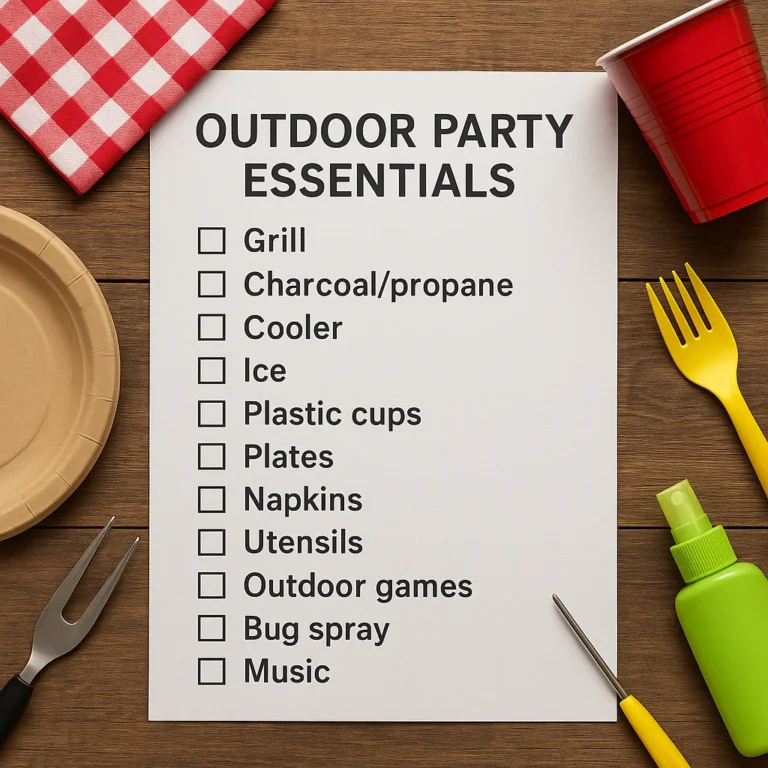
What should you include on an outdoor party checklist for hoverboard fun?
- Board manual and manufacturer water-use guidance
- Compatible cover, if appropriate, with fit checked in advance
- Helmets and protective equipment
- Flat, dry riding zone, cones, and waiting area
- Weather backup and shelter for stored boards
- Cleaning cloth and brush
- Charged board and manufacturer-approved charger
- Adult supervision where appropriate
- Clear stop rule for rain, crowding, or equipment issues
Use our birthday party checklist as a planning companion, and keep the riding activity separate from food, drinks, and pedestrian traffic.