Support our educational content for free when you purchase through links on our site. Learn more
🥂 15 Essential Dinner Party Etiquette Rules for Guests (2026)

We’ve all been there: the awkward silence when the host asks, “Does anyone have any allergies?” and you realize you forgot to mention your shellfish sensitivity, or the panic of arriving 30 minutes early only to find the host still frantically chopping vegetables in their pajamas. At Party Plan Checklist™, we’ve seen dinner parties turn from magical evenings into social disasters in the blink of an eye, often because a single guest missed a simple rule of engagement. But here’s the secret that separates the “invited back” crowd from the “ghosted” list: etiquette isn’t about rigid rules; it’s about making your host feel seen, respected, and appreciated.
In this comprehensive guide, we’re diving deep into the art of being the ultimate dinner party guest. From the precise timing of your RSVP to the delicate dance offering to help clean up (and knowing when to stop), we cover every nuance you need to navigate modern hospitality. We’ll even reveal the one specific question you should ask before accepting an invite that could save you from a culinary disaster, and why your phone is the most dangerous item you can bring to the table. Whether you’re a seasoned socialite or a nervous first-timer, these 15 essential rules will ensure you leave a lasting, positive impression.
Key Takeaways
- Timing is Everything: Arrive 10–15 minutes late to give the host a buffer, but never cancel last minute without a true emergency.
- Communication is Key: Disclose dietary restrictions immediately upon accepting the invite; never spring them on the host at the table.
- The Digital Detox: Leave your phone in your pocket; being present is the greatest gift you can give your host and fellow guests.
- Gratitude in Action: Always bring a thoughtful hostess gift that requires no immediate work, and send a thank you note within 48 hours.
- Know Your Exit: The best guests leave while the party is still fun, respecting the host’s need to rest and reset.
Table of Contents
- ⚡️ Quick Tips and Facts
- 📜 A Brief History of Dinner Party Etiquette: From Roman Banquets to Modern Tables
- 📩 The Art of the RSVP: Responding Promptly and Politely
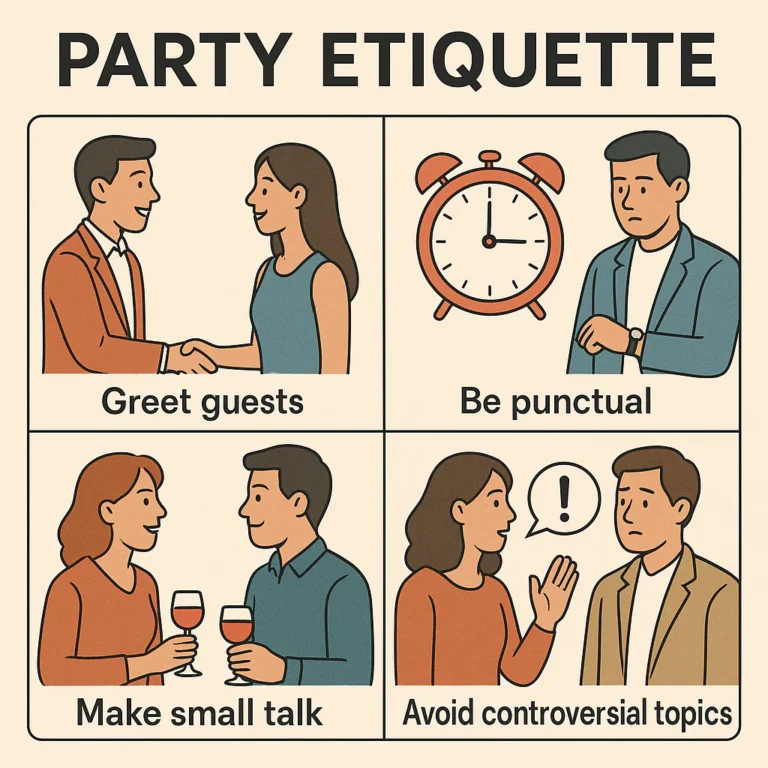
- 🕒 Punctuality Matters: How to Arrive On Time Without Being Too Early
- 🥗 Navigating Dietary Restrictions and Allergies with Grace
- 🤒 The Golden Rule: Why You Should Never Show Up Sick
- 👗 Dress Code Decoded: Choosing the Perfect Outfit for the Occasion
- 🎁 The Hostess Gift Guide: What to Bring and What to Avoid
- 🏡 Respecting the Host’s Home, Beliefs, and Environment
- 🗣️ Mastering the Art of Conversation: Topics to Embrace and Avoid
- 🍽️ Complimenting the Food: How to Praise Without Overdoing It
- 📵 Digital Detox: Why You Must Ignore Your Phone at the Table
- 🧹 Being a Helpful Guest: When to Lend a Hand and When to Step Back
- 🍷 Moderation is Key: How to Handle Alcohol Without Overindulging
- ⏰ Knowing When to Leave: The Fine Art of Not Overstaying Your Welcome
- 💌 The Power of the Written Thank You Note: Post-Party Gratitude
- 🔄 The Cycle of Hospitality: How to Reciprocate and Host Your Own
- 🌟 15 Essential Rules for Being the Most Memorable Guest at Any Dinner Party
- 🧐 Common Dinner Party Etiquette Mistakes to Avoid at All Costs
- 🌍 Cultural Nuances: Navigating International Dinner Party Customs
- 👶 Bringing Children or Pets: Is It Ever Okay?
- 🍳 Dealing with Awkward Moments and Table Disasters
- 📚 Conclusion
- 🔗 Recommended Links
- ❓ FAQ: Your Burning Questions About Dinner Party Etiquette Answered
- 📖 Reference Links
⚡️ Quick Tips and Facts
Before we dive into the deep end of the etiquette ocean, let’s grab a life raft of essential truths that will save you from social sinking. At Party Plan Checklist™, we’ve seen it all—from the guest who brought a live turkey to a vegan potluck to the one who texted their ex during the main course. Here are the non-negotiables to keep you in the “Good Guest” hall of fame:
- The Golden Rule of Timing: Arriving exactly on time is often too early; arriving 10–15 minutes late is the sweet spot. Why? Because the host is likely frantically plating the final garnish or hiding a spilled glass of wine.
- The “Sick” Clause: If you have a fever, a cough, or even a suspicious sniffle, stay home. Post-pandemic, showing up sick is the ultimate social faux pas. It’s not “toughing it out”; it’s a germ bomb.
- The Phone Blackout: Your phone is a black hole for conversation. Unless you are a parent with a babysitter on standby, leave it in your pocket or bag.
- The Gift Paradox: A hostess gift is mandatory, but it should never require the host to stop the party to unwrap it. No flowers that need trimming, no wine that needs decanting immediately.
- The Exit Strategy: The best guests leave while the party is still fun, not when the host is staring at a mountain of dirty dishes.
Pro Tip: One of the most common pitfalls we see in our 15 Party Planning Mistakes to Avoid (2026) guide is the failure to communicate boundaries. As a guest, your boundary is your health and your time; as a host, it’s their home. Respect both!
📜 A Brief History of Dinner Party Etiquette: From Roman Banquets to Modern Tables

You might think dinner party etiquette is just about which fork to use, but it’s actually a living history lesson. The concept of the “dinner party” has evolved from the Roman convivium, where guests reclined on couches and were served by slaves, to the Victorian era’s rigid formality, where a single wrong move could ruin a family’s reputation for generations.
In ancient Rome, the host’s status was displayed by the exotic foods served (think flamingo tongues and dormice). Today, the “status” is shown through hospitality and inclusivity. The shift from “showing off wealth” to “creating connection” is the biggest change in etiquette history.
| Era | Key Etiquette Focus | Modern Equivalent |
|---|---|---|
| Roman | Reclining, hierarchy of seating, exotic food | Seating charts, dietary accommodations |
| Medieval | Sharing from a common trencher (bread plate) | Family-style serving, communal platters |
| Victorian | Strict rules on cutlery, silence during eating | Polite conversation, knowing your utensils |
| Modern | Authenticity, digital detox, inclusivity | Being present, accommodating allergies |
Why does this matter? Because understanding the why behind the rules helps you adapt when the rules change. For instance, the Victorian rule of “never speak of politics” still holds true, but the reason has shifted from “maintaining class order” to “ensuring everyone feels safe and included.”
📩 The Art of the RSVP: Responding Promptly and Politely
Let’s be honest: RSVPing is the first test of your guesthood. When you receive an invitation, whether it’s a fancy paper card or a text message, your response is a commitment.
The “ASAP” Rule
As noted by etiquette experts at Nourish and Charm, “Commitment should not be a lost art.” When you say “yes,” you are telling the host, “I am a priority.” When you say “no,” you are giving them the gift of certainty so they can adjust their headcount for food and seating.
- ✅ Do: Respond within 24–48 hours of receiving the invite.
- ❌ Don’t: Wait until the day before to say you can’t make it. That’s not an RSVP; that’s a cancellation.
The Cancellation Conundrum
What if something comes up? Life happens. But here is the hard truth: Canceling without a true emergency or illness can get you on the “do not invite back” list.
If you must cancel:
- Call immediately. Do not text. A voice call shows respect.
- Apologize sincerely. Don’t over-explain; a simple “I’m sorry, but I’ve come down with the flu” is enough.
- Offer a make-up. “I’d love to take you out for coffee next week to make up for it.”
Curiosity Gap: But what if the host asks you to bring a dish? Is that an invitation to cook, or a test of your culinary skills? We’ll tackle that in the “Lend a Helping Hand” section, but for now, remember: never assume you can bring a dish unless explicitly asked.
🕒 Punctuality Matters: How to Arrive On Time Without Being Too Early
There is a delicate dance to arriving at a dinner party. Arriving too early is like walking into a kitchen while the chef is still plating the final garnish. Arriving too late is like walking into a movie after the climax.
The Grace Window
The golden rule is to arrive 10 to 15 minutes after the stated start time.
- Why? If the invite says 7:0 PM, aim for 7:10 PM. This gives the host a buffer to finish cooking, set the table, and pour the first round of drinks.
- The “Too Early” Trap: If you arrive at 6:45 PM, the host might be in their pajamas, still chopping onions, or stressed about the oven timer. You become an extra pair of hands they didn’t ask for.
What If You’re Running Late?
If traffic is a nightmare or your babysitter is late:
- Call the host. Do not just show up late.
- Give an ETA. “I’m stuck in traffic, but I’ll be there in 20 minutes.”
- Apologize upon arrival. “So sorry for the delay, I hope I didn’t miss the appetizers!”
Fun Fact: In some cultures, like in parts of Latin America or Southern Europe, arriving 30 minutes late is considered “on time.” However, in the US and UK, punctuality is king. When in doubt, ask the host or stick to the 10-minute grace window.
🥗 Navigating Dietary Restrictions and Allergies with Grace
This is where many guests stumble. You have a gluten intolerance, a vegan diet, or a severe peanut allergy. How do you tell the host without making them feel like they’ve failed?
The “Early Bird” Protocol
Communicate dietary restrictions immediately upon accepting the invitation.
- ✅ Do: “Thank you so much for the invite! I’m so excited. Just a heads-up, I have a severe allergy to shellfish. Please don’t worry about it, I can bring my own snack if needed, but I wanted to let you know early.”
- ❌ Don’t: Wait until you sit down at the table to say, “Oh, by the way, I can’t eat dairy.” This forces the host to scramble and makes other guests feel awkward.
The “Plus-One” Dilemma
If you are bringing a guest, you are responsible for their dietary needs. It is not the host’s job to guess what your partner eats.
- Rule of Thumb: If your guest has a restriction, inform the host before the party. If they say, “Don’t worry, I’ll make something,” and they don’t, bring your own backup.
The “I’m Just Picky” vs. “I’m Allergic”
There is a difference between a preference and a medical necessity.
- Allergy: Non-negotiable. The host must accommodate.
- Preference: “I don’t like mushrooms.” This is fine to mention, but be prepared to eat around them or bring a small snack.
Pro Tip: If you are unsure about the menu, it is perfectly acceptable to ask, “Could you tell me a little about what’s being served? I want to make sure I don’t accidentally eat something I’m allergic to.” Most hosts appreciate the clarity.
🤒 The Golden Rule: Why You Should Never Show Up Sick
Let’s be blunt: Showing up to a dinner party when you are sick is selfish.
In the post-pandemic world, the tolerance for “toughing it out” has vanished. If you have a fever, a cough, a sore throat, or even a runy nose, stay home.
The “Germ Stress” Factor
As Nourish and Charm points out, showing up sick creates “germ stress” for other guests. You might think, “I’m just taking a Motrin and I’ll be fine,” but that is a gamble you shouldn’t take.
- The Risk: You could infect an elderly guest, a pregnant woman, or someone with a compromised immune system.
- The Etiquette: A simple text or call: “I’m sorry, but I’ve come down with the flu. I can’t make it tonight, but I hope you all have a wonderful time.”
The “Just a Cold” Excuse
“I just have a little cold.”
- Reality Check: A “little cold” can turn into a full-blown flu for someone else. If you are coughing into your hand or snezing, you are a walking biohazard.
Curiosity Gap: But what if you do get sick after the party? Should you tell the host? Yes! If you realize you were contagious during the event, let the host know so they can warn other guests. It’s the responsible thing to do.
👗 Dress Code Decoded: Choosing the Perfect Outfit for the Occasion
Dressing for a dinner party is an art form. You want to look polished but not overdressed, stylish but not distracting.
The Dress Code Spectrum
- Casual: Jeans and a nice top are fine. Avoid sweatpants or gym wear.
- Smart Casual: Chinos, blouses, or a nice dress. A blazer is always a safe bet.
- Cocktail: A little black dress, a suit, or a dressy jumpsuit.
- Formal: Tuxedo or floor-length gown.
The “Overdress a Bit” Rule
It is generally better to be slightly overdressed than underdressed. If you show up in a tuxedo to a casual BBQ, you might feel awkward, but you won’t offend the host. If you show up in sweatpants to a cocktail party, you’ve broken the social contract.
Theme Parties
If the invitation mentions a theme (e.g., “Great Gatsby,” “Tropical Luau”), follow it. It shows you put in the effort. If you’re unsure, ask the host: “Is there a specific dress code or theme I should know about?”
Pro Tip: If you’re unsure about the dress code, check the venue. A dinner at a Michelin-star restaurant usually requires formal wear, while a dinner at a friend’s apartment is likely smart casual.
🎁 The Hostess Gift Guide: What to Bring and What to Avoid
The hostess gift is a token of appreciation, not a bribe. It should be thoughtful, not extravagant.
The “No-Work” Rule
The best hostess gifts are ready to use.
- ✅ Do: Bring a bottle of wine (if the host drinks), a bouquet of pre-trimed flowers in a vase, a box of high-quality chocolates, or a local specialty (like honey or spices).
- ❌ Don’t: Bring flowers that need trimming, a cake that needs slicing, or a gift that requires the host to stop the party to unwrap it.
Gift Ideas by Category
| Category | Great Options | Avoid |
|---|---|---|
| Food & Drink | Local honey, artisanal chocolates, specialty olive oil | Homemade goods (unless you know the host loves them) |
| Flowers | Pre-trimed bouquet in a vase, potted plant | Cut flowers that need water and trimming |
| Home | Scented candle, nice kitchen towel | Decor items (too personal) |
| Experience | Gift card to a local bakery, wine tasting voucher | Cash (too impersonal) |
The “Ask” Strategy
If you’re really unsure, ask the host: “Is there anything I can bring to help?” Sometimes the best gift is a bottle of sparkling water or a bag of ice.
Pro Tip: If you bring a bottle of wine, do not expect it to be served that night. The host might have a specific pairing in mind. It’s a gift for them to enjoy later.
🏡 Respecting the Host’s Home, Beliefs, and Environment
Your host has opened their home to you. That is a huge gesture of trust. Respect it.
The “No-Snoping” Rule
- ✅ Do: Stick to the areas you are invited to (living room, dining room, patio).
- ❌ Don’t: Wander into the bedroom, bathroom (unless necessary), or kitchen unless invited. Do not touch decorations, music systems, or personal items.
House Rules
- Shoes: If the host takes off their shoes, you should too. If you’re unsure, ask: “Should I take my shoes off?”
- Pets: If the host has pets, ask before peting them. Some pets are shy or have allergies.
- Smoking: Never smoke inside unless explicitly invited to do so. If you need a smoke break, ask where you can go.
Beliefs and Rituals
If the host has a specific ritual (like saying grace before the meal), participate respectfully even if you don’t share the belief. It’s about honoring their tradition, not converting them.
Curiosity Gap: But what if the host’s house is messy? Should you offer to help clean? We’ll get to that in the “Lend a Helping Hand” section, but for now, remember: never comment on the state of the house.
🗣️ Mastering the Art of Conversation: Topics to Embrace and Avoid
Conversation is the lifeblood of a dinner party. A good guest is a good conversationalist.
The “Be Interested” Rule
As the saying goes, “Be interested and interesting.” Ask questions, listen actively, and draw out quieter guests.
Topics to Embrace
- Travel: “Where’s the most beautiful place you’ve ever been?”
- Food: “What’s your favorite dish to cook?”
- Hobbies: “What do you do for fun when you’re not working?”
- Current Events (Light): “Did you see that new exhibit at the museum?”
Topics to Avoid
- Politics: Unless it’s a political dinner party, avoid divisive topics.
- Religion: Similar to politics, keep it light.
- Money: Never ask about salaries or the cost of things.
- Drama: Avoid gossip or complaining about your life.
The “Story Toper”
Don’t be the person who says, “Oh, that’s nothing, let me tell you about the time I…” Listen to the other person’s story first.
Pro Tip: If the conversation stalls, ask a question about the host. “How did you get into [host’s hobby]?” It’s flattering and keeps the focus on them.
🍽️ Complimenting the Food: How to Praise Without Overdoing It
Complimenting the food is a must, but there’s a fine line between genuine praise and over-the-top flattery.
The “Specific” Compliment
Instead of “This is good,” say:
- “The seasoning on this chicken is perfect.”
- “I love the texture of this salad.”
- “This dessert is incredible; did you make it from scratch?”
The “Negative Feedback” Dilemma
If the food is not good, do not say it. Focus on the atmosphere, the company, or the effort.
- ✅ Do: “I love the ambiance you’ve created.”
- ❌ Don’t: “This is a bit salty.”
The Toast
If you’re comfortable, toast the host at the end of the meal. “To [Host’s Name], for a wonderful evening.”
Curiosity Gap: But what if you’re allergic to something on the plate? Should you eat it anyway? No! Politely decline and explain your allergy. The host will appreciate your honesty.
📵 Digital Detox: Why You Must Ignore Your Phone at the Table
Your phone is a conversation killer. If you’re scrolling through Instagram while your host is talking, you’re sending a clear message: “I don’t care.”
The “Phone in the Bag” Rule
- ✅ Do: Put your phone in your pocket or bag. If you need to check it, excuse yourself.
- ❌ Don’t: Leave your phone on the table, even face down. It’s a distraction.
Exceptions
- Parents: If you have young children, it’s okay to check your phone discreetly for emergencies.
- Work: If you’re expecting a critical call, let the host know beforehand. “I’m expecting an important call, so I might need to step out for a minute.”
Pro Tip: If you’re at a dinner party and your phone rings, let it go to voicemail. It’s rude to answer.
🧹 Being a Helpful Guest: When to Lend a Hand and When to Step Back
This is the most confusing part of dinner party etiquette. Should you help clean up?
The “Offer” Rule
Always offer to help. Even if the host says no, the offer shows you care.
- ✅ Do: “Can I help you clear the table?” or “Can I take these dishes to the kitchen?”
- ❌ Don’t: Start clearing the table without asking. The host might have a specific system.
The “No, Thank You” Response
If the host says, “No, really, it’s easier if I do it myself,” respect that. They might want to control the cleanup or have a specific routine.
- Alternative: Offer to help with something else, like gathering drinks or setting up the dessert table.
The “Catered Event” Exception
If the event is catered, do not offer to help the staff. They are professionals. Instead, be kind and appreciative.
Curiosity Gap: But what if the host is overwhelmed and you see them struggling? Should you step in anyway? Yes! If the host is clearly stressed, it’s okay to gently offer help: “I can see you’re busy, let me take these dishes.”
🍷 Moderation is Key: How to Handle Alcohol Without Overindulging
Alcohol can be a great way to relax, but overindulging is a quick way to ruin a party.
The “One Drink” Rule
Aim for one or two drinks during the meal. If you’re drinking, pace yourself.
- ✅ Do: Alternate with water. Eat food while drinking.
- ❌ Don’t: Start drinking before the party starts.
The “Safe Ride” Plan
If you’re drinking, arrange your own transportation. Do not make the host responsible for getting you home.
- ✅ Do: Call a rideshare, have a designated driver, or stay overnight (if invited).
- ❌ Don’t: Ask the host to drive you home.
Pro Tip: If you’re not a drinker, don’t feel pressured to drink. A glass of sparkling water or a mocktail is perfectly acceptable.
⏰ Knowing When to Leave: The Fine Art of Not Overstaying Your Welcome
The best guests leave while the party is still fun.
The “Cues” to Watch For
- The Host: Are they checking their watch? Are they starting to clear the table?
- The Music: Is the music stopping?
- The Guests: Are people starting to leave?
- The Conversation: Is the conversation winding down?
The “Exit Strategy”
- ✅ Do: Say your goodbyes to the host and other guests. “Thank you so much for a wonderful evening. I should get going.”
- ❌ Don’t: Be the last guest to leave. It puts pressure on the host to keep you company.
Curiosity Gap: But what if the host insists you stay longer? Should you? Only if you’re comfortable. If you’re tired, it’s okay to say, “I’d love to, but I have an early morning tomorrow.”
💌 The Power of the Written Thank You Note: Post-Party Gratitude
A thank you note is the final touch of a great guest. It shows you appreciated the effort.
The “Email vs. Handwritten” Rule
- Dinner Party: An email or text is acceptable.
- Overnight Stay: A handwritten note is required.
- Special Occasions: Send flowers or a special gift.
The “What to Say”
- ✅ Do: “Thank you so much for the wonderful evening. The food was delicious, and I loved the company.”
- ❌ Don’t: “Thanks for the party.” (Too vague)
Pro Tip: Send your thank you note within 24–48 hours of the party. It’s fresh in everyone’s mind.
🔄 The Cycle of Hospitality: How to Reciprocate and Host Your Own
The best way to say “thank you” is to invite the host to your next dinner party.
The “Reciprocate” Rule
- ✅ Do: Invite the host to your home for a meal. “I’d love to have you over for dinner next month.”
- ❌ Don’t: Wait for them to invite you back. Take the initiative.
The “Host Your Own” Tips
- Plan ahead: Use our Birthday Party Checklist for inspiration.
- Be flexible: Don’t stress over perfection.
- Enjoy the process: Hosting is about creating memories, not perfection.
Curiosity Gap: But what if you’re not a good cook? Should you still host? Yes! You can order takeout, hire a private chef, or do a potluck. The goal is to bring people together.
🌟 15 Essential Rules for Being the Most Memorable Guest at Any Dinner Party
Here is our ultimate checklist for being the guest everyone wants to invite back:
- RSVP promptly and honor your commitment.
- Arrive 10–15 minutes late (the grace window).
- Communicate dietary restrictions early.
- Never show up sick.
- Dress appropriately for the occasion.
- Bring a thoughtful hostess gift.
- Respect the host’s home and rules.
- Master the art of conversation.
- Compliment the food specifically.
- Ignore your phone at the table.
- Offer to help with cleanup.
- Moderate your alcohol consumption.
- Know when to leave.
- Send a thank you note within 48 hours.
- Reciprocate by hosting your own party.
🧐 Common Dinner Party Etiquette Mistakes to Avoid at All Costs
Even the best guests make mistakes. Here are the most common pitfalls to avoid:
- The “Late” Guest: Arriving 30+ minutes late without notice.
- The “Sick” Guest: Showing up with a cold or flu.
- The “Phone” Guest: Scrolling through social media during the meal.
- The “Drama” Guest: Bringing up politics or gossip.
- The “Overstay” Guest: Being the last to leave.
- The “No-Thank-You” Guest: Not sending a thank you note.
Pro Tip: If you make a mistake, apologize sincerely and move on. Don’t dwell on it.
🌍 Cultural Nuances: Navigating International Dinner Party Customs
Dinner party etiquette varies globally. Here are a few cultural nuances to keep in mind:
- Japan: It’s polite to leave a little food on your plate to show you’re full. In the US, finishing your plate is a compliment.
- France: Tipping is not expected, but a small gift is appreciated.
- Italy: It’s rude to ask for cheese on seafood.
- Middle East: It’s polite to eat with your right hand.
Pro Tip: If you’re attending a dinner party with a different cultural background, do your research or ask the host about customs.
👶 Bringing Children or Pets: Is It Ever Okay?
This is a tricky topic.
Children
- ✅ Do: Ask the host if children are welcome. If they say yes, bring a small gift for the host.
- ❌ Don’t: Bring children if the host didn’t invite them. It’s not fair to the host or other guests.
Pets
- ✅ Do: Ask the host if pets are welcome. If they say yes, bring a small gift for the host.
- ❌ Don’t: Bring pets if the host didn’t invite them. Some people have allergies or fears.
Pro Tip: If you’re unsure, ask the host. It’s better to ask than to assume.
🍳 Dealing with Awkward Moments and Table Disasters
Even the best-planned parties can have awkward moments. Here’s how to handle them:
- Spilled Wine: Apologize, offer to help clean, and move on.
- Silence: Ask a question to break the ice.
- Argument: Gently change the subject. “Let’s talk about something more fun.”
Pro Tip: If you’re the host, don’t panic. A little humor goes a long way.
🎥 Featured Video Perspective
As we discussed earlier, the first YouTube video in our research emphasizes a crucial mindset: “Put yourself in the shoes of the host here.” It reminds us that “an invitation is not a negotiation.” This perspective shifts the focus from what you want to what the host needs. By adopting this mindset, you become a more empathetic and considerate guest.