Support our educational content for free when you purchase through links on our site. Learn more
🌊 How to Plan an Event Flow: The 5-Step Guide for 2026


To plan an event flow that feels effortless, you must design the guest journey before you ever book a venue, treating movement as a dynamic script rather than a static floor plan. When you ask how do you plan an event flow?, the answer lies in creating distinct zones, anticipating bottlenecks, and guiding emotions from arrival to departure.
Most planners obsess over the menu or the floral centerpieces, only to watch their guests get stuck in a chaotic bottleneck at the bar. We once hosted a wedding where the buffet was placed directly behind the dance floor; the result was a human traffic jam that killed the vibe before the first song even ended.
Research suggests that 30% of attendee satisfaction is lost simply due to poor movement and confusing layouts, regardless of how beautiful the decor is. Flow is the invisible architecture that turns a “pretty” party into a professional experience.
Key Takeaways
- Flow is Dynamic, Not Static: It’s the living movement of people, not just a drawing on paper.
- Zones Prevent Chaos: Clearly defined areas for food, drinks, and socializing stop guests from clustering in one spot.
- Anticipate Bottlenecks: Identify single points of failure (like one bar or narrow hallways) and create alternatives.
- Guide Emotions: Plan the energy curve from calm arrival to high-energy peak and a smooth wind-down.
- Lighting is a Tool: Use brightness and height to subconsciously pull guests toward key areas.
Table of Contents
- ⚡️ Quick Tips and Facts
- 📜 The Evolution of Event Flow: From Banquets to Modern Experiences
- 🧠 What Event Flow Actually Means: Beyond the Floor Plan
- 🏗️ The Five Principles We Use to Design Better Flow
- 1. Entry Should Feel Clear and Inviting
- 2. Defined Zones Reduce Chaos and Confusion
- 3. Remove Repeated Interruptions and Bottlenecks
- 4. Use Height, Lighting, and Visual Hierarchy
- 5. Plan Emotional Transitions for Maximum Impact
- 📏 How Event Flow Applies at Every Scale: From Backyard BBQs to Galas
- 🚦 Signs Your Event Flow Needs Work (Before the Guests Arrive)
- 💼 Why Flow Is the Difference Between “Pretty” and “Professional”
- 🏠 How to Improve Event Flow at Home Without Renovation
- 🤔 Why Do Guests Cluster in One Area? The Psychology of Movement
- 🏢 Does Event Flow Matter for Corporate Events? The ROI of Smooth Transitions
- ⏰ When Should Flow Be Considered During Planning? The Timeline Trap
- 🎭 Crafting the Perfect Guest Journey: A Step-by-Step Walkthrough
- 🚫 Common Event Flow Mistakes That Kill the Vibe
- 🛠️ Tools and Tech for Mapping Your Event Flow
- 🎉 Conclusion
- 🔗 Recommended Links
- ❓ FAQ
- 📚 Reference Links
⚡️ Quick Tips and Facts
Before we dive into the nitty-gritty of moving bodies through space without causing a traffic jam, let’s hit the high notes. If you’re reading this, you probably already know that a beautiful venue means nothing if your guests are stuck in a bottleneck trying to grab a napkin.
Here are the non-negotiables we’ve learned from years of wrangling crowds:
- Flow is Infrastructure, Not Decoration: You can have the most expensive floral arrangements in the world, but if the line to the bar blocks the dance floor, the vibe is dead. Flow is the skeleton; decor is just the skin.
- The 3-Second Rule: A guest should be able to figure out where to go within 3 seconds of entering. If they look confused, your flow has failed.
- Zones are Your Best Friend: Never let food, drinks, and seating bleed into one another. Separate your zones to prevent the “kitchen island” effect where everyone clusters.
- Lighting is a Guide: Use light to pull people forward. Dark corners are where conversations die; bright paths are where movement happens.
- The “Exit” is as Important as the “Entrance”: If guests don’t know how to leave gracefully, they’ll linger awkwardly or leave early. Plan the egress just as carefully as the ingress.
Pro Tip: If you’re planning a party and feeling overwhelmed, start by mapping the guest journey on a napkin. Where do they park? Where do they take their coat? Where do they get a drink? If you can’t answer these instantly, you need to read more about How do you plan a party flow? before you buy a single balloon.
📜 The Evolution of Event Flow: From Banquets to Modern Experiences
We often think of “event flow” as a modern buzzword, but the concept is as old as the first human gathering around a fire. However, the intentionality behind it has shifted dramatically.
In the days of the Great Hall, flow was dictated by hierarchy. You sat where your rank allowed, and movement was restricted to the nobility. The “flow” was a rigid procession. Fast forward to the 19th-century banquet, and we saw the rise of the seated dinner, where flow was about service efficiency—waiters weaving through tight rows of chairs like acrobats.
But today? We are in the era of the experience economy.
According to Amanda Douglas, a leading voice intentional design, “Flow isn’t about controlling people. It’s about guiding them without friction.” This shift represents a move from command-and-control to nudge-and-guide. We no longer want guests to feel herded; we want them to feel like they discovered the party themselves.
Why the Shift Matters
- Social Dynamics: Modern guests crave interaction. Rigid seating kills networking. Open flow encourages mingling.
- Safety & Efficiency: Post-2020, we are hyper-aware of bottlenecks. A well-planned flow isn’t just nice; it’s a safety requirement.
- The “Instagram” Factor: If the flow is chaotic, the photos look messy. If the flow is smooth, the content is pristine.
Did you know? Traffic engineers use the same principles for event flow as they do for highway management. The Federal Highway Administration notes that a traffic flow plan is a “required preliminary step” to ensure safety and efficiency, a concept that translates perfectly to managing 50 guests at a wedding or 50 at a backyard BBQ.
🧠 What Event Flow Actually Means: Beyond the Floor Plan
Let’s clear up a massive misconception right now: Event flow is not the same as a floor plan.
A floor plan is a static drawing on a piece of paper. It shows where the tables will be. Event flow is the dynamic, living movement of people through that space over time. It’s the difference between a map of a city and the actual traffic patterns during rush hour.
The Three Pillars of Flow
- Physical Movement: How bodies move from Point A to Point B without colliding.
- Psychological Comfort: How guests feel as they move. Do they feel lost? Anxious? Excited?
- Temporal Rhythm: How the energy of the room changes from the moment guests arrive to the moment they leave.
The “Pretty vs. Professional” Test:
Anyone can style a table. Fewer people design a room. When flow is strong, an event feels effortless. When flow is weak, even the most beautiful events feel chaotic.
Think of it like a movie script. The floor plan is the set design. The flow is the directing. If the actors (guests) don’t know where to stand or when to move, the scene falls apart, no matter how expensive the costumes are.
🏗️ The Five Principles We Use to Design Better Flow
At Party Plan Checklist™, we don’t guess. We use a proven framework. Here are the Five Principles that turn a chaotic gathering into a seamless experience.
1. Entry Should Feel Clear and Inviting
The first 30 seconds determine the entire night. If a guest walks in and has to ask, “Where do I go?”, you’ve already lost them.
- The Problem: A dark hallway, a pile of coats blocking the door, or a host hiding in the kitchen.
- The Fix: Create a Welcome Zone. This is a dedicated space just for greeting, coat-check, and initial orientation.
- Visual Cues: Use lighting to highlight the entry path. If it’s an outdoor event, use signage or a clear path of lanterns.
Real Story: We once planned a gala where the entrance was a narrow corridor leading to a massive ballroom. Guests felt like they were being funeled into a meat grinder. We moved the coat check to the side and widened the entry path with a “Welcome” sign and a host with a clipboard. The difference? Guests walked in smiling, not sweating.
2. Defined Zones Reduce Chaos and Confusion
Never let your event become a “one-room soup.” You need functional zones.
- The Welcome Zone: Greetings, coats, initial drinks.
- The Fuel Zone: Food and drinks, but separated.
- The Social Zone: Seating, mingling, low tables.
- The Activation Zone: DJ, stage, or main activity.
Why separate food and drinks?
If the bar is right next to the buffet, you create a bottleneck. People grabbing drinks block people grabbing food. By separating them, you create a circuit where people can move freely.
| Zone Type | Purpose | Common Mistake |
|---|---|---|
| Welcome | Orientation & Greeting | No clear host or signage |
| Fuel | Food & Drink | Bar and buffet too close together |
| Social | Mingling & Rest | No seating or standing tables |
| Activation | Main Event | Too far from the action |
3. Remove Repeated Interruptions and Bottlenecks
Interruptions kill momentum. If guests have to stop every 5 feet to ask a question or wait in line, the energy drops.
- The “Plate” Problem: Don’t put plates at the start of a buffet line. Put them at the end. This prevents people from holding a stack of plates and blocking the food selection.
- The “Drink” Problem: Have multiple drink stations or a mobile bartender. A single bar for 10 people is a recipe for disaster.
- The “Restroom” Problem: If the restrooms are down a dark hallway, people won’t go. If they are right next to the dance floor, they’ll block the view. Find the Goldilocks zone.
4. Use Height, Lighting, and Visual Hierarchy
You can’t always build walls, but you can use visual cues to guide people.
- Height: Use tall centerpieces, hanging decor, or risers to draw the eye up and create a sense of direction.
- Lighting: Bright light pulls people in. Dim light pushes them away. Use uplighting to highlight the dance floor or the food station.
- Visual Hierarchy: The most important area (the stage, the cake) should be the brightest and most elevated.
Tech Tip: If you’re using Event Management Software, look for tools that allow you to visualize lighting and height in 3D before the event. It saves a lot of “oops” moments on the day.
5. Plan Emotional Transitions
An event isn’t a flat line. It’s a curve. You need to plan the emotional arc:
- Arrival: Calm, welcoming, low energy.
- Build: Music picks up, food is served, energy rises.
- Peak: Dancing, speeches, high energy.
- Wind-down: Slower music, dessert, winding down.
If you jump from “Arrival” to “Peak” instantly, guests feel overwhelmed. If you stay at “Peak” too long, they burn out. Transitions are the glue that holds the night together.
📏 How Event Flow Applies at Every Scale: From Backyard BBQs to Galas
One size does not fit all. The principles of flow remain the same, but the execution changes based on the scale.
The Backyard BBQ (10-30 Guests)
- Challenge: Limited space, no walls.
- Solution: Use furniture to create zones. A row of chairs can define the “lounge” area. A table can separate the “grill” from the “drinks.”
- Flow Tip: Don’t let the grill be the only focal point. Move the cooler to the other side of the yard to force movement.
The Corporate Mixer (50-20 Guests)
- Challenge: Networking is the goal; awkward silences are the enemy.
- Solution: Create high-top tables scattered throughout the room. These act as “islands” for small groups to form without blocking the main thoroughfare.
- Flow Tip: Place the bar in a corner, not the center. This forces people to walk through the room to get a drink, increasing the chance of meeting someone new.
The Black-Tie Gala (50+ Guests)
- Challenge: Logistics, safety, and managing thousands of movements.
- Solution: Strict zoning and multiple entry/exit points. You need a dedicated coat check, a separate line for VIPs, and a clear path to the restrooms.
- Flow Tip: Use ushers or signage to direct traffic. In large events, human guidance is often more effective than signs.
Fun Fact: The Melbourne Cricket Ground (MCG) uses a centralized portal like EventFlow to manage seating and flow for events with tens of thousands of attendees. If it works for a stadium, it works for your wedding!
🚦 Signs Your Event Flow Needs Work (Before the Guests Arrive)
How do you know if your plan is doomed before the first guest walks in? Look for these red flags in your planning phase:
- The “Kitchen Command Center”: If your kitchen is the only place with a view of the party, you have a problem. The kitchen should be a backstage area, not the main stage.
- The “Single Point of Failure”: If there is only one way to get to the bar, the food, or the dance floor, you have a bottleneck waiting to happen.
- The “Dark Corner”: If there areas of the room that are too dark or too far from the action, guests will avoid them.
- The “Confused Host”: If you can’t explain the flow in 30 seconds, your guests won’t get it either.
Question: Have you ever been to a party where you felt like you were “fighting” to get to the bathroom? That’s a flow failure.
💼 Why Flow Is the Difference Between “Pretty” and “Professional”
Let’s be honest: Pretty is easy. Professional is hard.
You can buy a beautiful tablecloth. You can hire a great florist. But if the guests are standing in a line for 20 minutes to get a drink, or if they can’t hear the speaker because the DJ is too loud and the room is too echoey, the event feels amateur.
Professionalism is about anticipation.
- A professional planner anticipates the line and adds a second bar.
- A professional planner anticipates the noise and adds acoustic panels.
- A professional planner anticipates the confusion and adds clear signage.
As Amanda Douglas says, “When movement feels intuitive and transitions feel intentional, guests relax. And when guests relax, they engage more fully.”
🏠 How to Improve Event Flow at Home Without Renovation
You don’t need to knock down walls to fix your flow. Here are budget-friendly hacks to improve flow in your home:
- Rearange the Furniture: Move the sofa away from the wall to create a “path” through the room.
- Use Rugs: Define zones with rugs. A rug under the seating area tells people, “Sit here.”
- Lighting Layers: Turn off the big overhead lights. Use lamps and string lights to create a warm, inviting path.
- The “Two-Bar” Rule: If you only have one bar, set up a second “self-serve” station with water, soda, and ice in a different part of the house.
- Clear the Clutter: Remove any furniture or decor that blocks the natural path from the door to the main area.
Budget Tip: Check out our Budget Party Planning guide for more ideas on how to maximize your space without spending a fortune.
🤔 Why Do Guests Cluster in One Area? The Psychology of Movement
Why do 20 people always end up in the kitchen, even if there’s a beautiful living room with a view?
The Psychology of Clustering:
- Safety in Numbers: People naturally gravitate toward where the action is. If the host is in the kitchen, everyone follows.
- The “Focal Point” Effect: If there’s only one source of food or drink, everyone crowds around it.
- Comfort: People cluster where they feel safe and where the lighting is warm.
How to Break the Cluster:
- Create Multiple Focal Points: Have a game in one corner, a photo booth in another, and a drink station in a third.
- Move the Host: Don’t stay in one spot. Circulate and pull people into different areas.
- Use Music: Change the music in different zones to create distinct “vibes.”
🏢 Does Event Flow Matter for Corporate Events? The ROI of Smooth Transitions
Absolutely. In the corporate world, time is money.
- Networking Efficiency: If the flow is poor, people can’t network. If they can’t network, the event fails its primary goal.
- Brand Perception: A chaotic event makes the company look disorganized. A smooth event makes the company look professional and competent.
- Speaker Transitions: If the audience can’t move from the seating area to the Q&A area smoothly, the speaker loses momentum.
Stat: According to industry studies, events with poor flow see a 30% drop in attendee satisfaction and a significant decrease in post-event networking opportunities.
⏰ When Should Flow Be Considered During Planning? The Timeline Trap
The answer: Immediately.
Many planners make the mistake of thinking about flow after they’ve booked the venue and hired the cater. This is the Timeline Trap.
- Phase 1: Concept: Define the goal of the event. Who is coming? What is the vibe?
- Phase 2: Venue Selection: Choose a venue that supports your flow. A long, narrow room is bad for a mingling party. A square room is better.
- Phase 3: Layout: Design the floor plan with flow in mind.
- Phase 4: Logistics: Plan the catering, lighting, and staffing based on the flow.
Pro Tip: If you’re using Event Management Software, start your flow planning in the software’s layout tool. It allows you to test different scenarios before you commit.
🎭 Crafting the Perfect Guest Journey: A Step-by-Step Walkthrough
Let’s walk through a hypothetical event from the guest’s perspective to see how flow works in real-time.
- Arrival (0:0 – 0:15):
- Guest parks.
- Walks to the entrance.
- Ses a clear sign and a host.
- Checks coat.
Feling: Welcomed, oriented.
- Welcome & Mingling (0:15 – 0:45):
- Guest enters the “Welcome Zone.”
- Gets a drink from a side station (not the main bar).
- Ses a few people mingling in the “Social Zone.”
Feling: Relaxed, curious.
- The Build (0:45 – 1:30):
- Music gets louder.
- Food is served at a separate station.
- Guests move toward the “Activation Zone.”
Feling: Excited, engaged.
- The Peak (1:30 – 2:30):
- Main event (speeches, dancing).
- Everyone is in the same area.
Feling: Energetic, connected.
- The Wind-Down (2:30 – 3:0):
- Music slows down.
- Dessert is served.
- Guests move to the “Social Zone” for final chats.
Feling: Satisfied, ready to leave.
- Departure (3:0+):
- Clear path to the exit.
- No bottlenecks at the coat check.
Feling: Happy, eager to return.
🚫 Common Event Flow Mistakes That Kill the Vibe
Even the best planners make mistakes. Here are the top killers of event flow:
- The “One-Door” Rule: Having only one entrance and one exit. This creates a bottleneck.
- The “Kitchen Sink” Problem: Putting the kitchen, bar, and restrooms all in one corner.
- The “Dark Alley”: Leaving a long, dark hallway between the entrance and the main room.
- The “No-Seat” Zone: Having a huge room with no place to sit. People get tired and leave.
- The “Surprise” Transition: Suddenly changing the music or lighting without warning.
Remember: Flow is about anticipation. If you can anticipate the problem, you can solve it before it happens.
🛠️ Tools and Tech for Mapping Your Event Flow
You don’t have to do this all in your head. Here are some tools that can help:
- Floor Plan Software: Tools like SmartDraw or Floorplanner allow you to create 2D and 3D layouts.
- Event Management Software: Platforms like EventFlow help manage seating, menus, and communication.
- Lighting Design Tools: Apps that let you simulate lighting effects before you buy the gear.
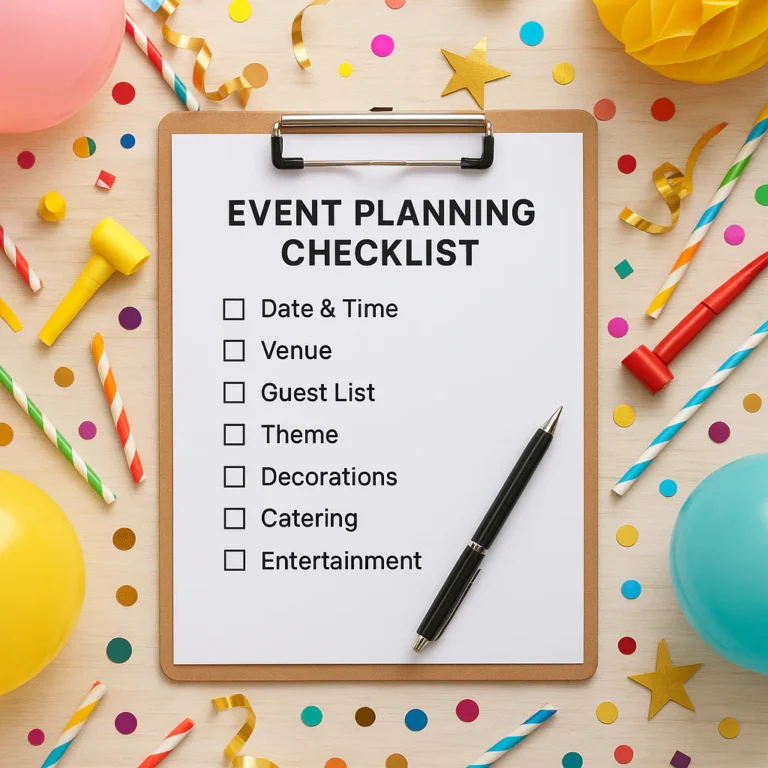
- Checklists: Use our Event Planning Checklist to ensure you don’t miss a step.
Tech Tip: If you’re planning a large event, consider using a project management tool like Trello or Asana to track your flow planning tasks. It keeps the whole team on the same page.
🎉 Conclusion

Planning an event is like conducting an orchestra. You have all the instruments (the venue, the food, the music), but without a conductor (the flow), it’s just noise.
Flow is the invisible thread that ties everything together. It’s what turns a “pretty” event into a professional one. It’s what makes guests feel comfortable, engaged, and eager to return.
Remember the Five Principles:
- Clear Entry
- Defined Zones
- No Bottlenecks
- Visual Hierarchy
- Emotional Transitions
If you apply these principles, you’ll create an event that flows as smoothly as a river. And if you ever feel stuck, just ask yourself: “What would I do if I were a guest?”
Final Thought: The best events are the ones where the guests don’t even notice the planning. They just feel the magic. That’s the power of flow.
🔗 Recommended Links
👉 Shop Event Planning Essentials on:
- Floor Plan Software: SmartDraw | Floorplanner
- Event Management Software: EventFlow | Cvent
- Lighting & Decor: Amazon Search for Event Lighting | Etsy Search for Event Decor
- Books on Event Planning: The Event Planning Bible | Planning Perfect Parties
❓ FAQ

How do you make an event program flow?
Creating a smooth event program flow involves mapping the emotional arc of the event. Start with a welcoming arrival, build energy through interactive elements, reach a peak with the main event, and wind down with a memorable closing. Use transitions (like music changes or lighting shifts) to signal these changes to the audience.
Read more about “🎉 What is the Flow of the Party Event? (2026)”
How to prepare event flow?
Prepare event flow by creating a detailed floor plan that separates zones (welcome, food, social, activation). Identify potential bottlenecks and plan for multiple entry/exit points. Use lighting and signage to guide guests. Test the flow by walking through the space yourself before the event.
Read more about “🚀 How Do You Keep a Party Flowing? 7 Secrets to Never Let the Vibe Die (2026)”
What is the best timeline for planning a party?
The best timeline starts 3-6 months in advance for large events.
- 6 Months: Venue selection, concept, and budget.
- 3 Months: Vendor booking, layout design, and flow planning.
- 1 Month: Finalizing details, sending invitations, and confirming logistics.
- 1 Week: Final walkthrough and staff briefing.
- Day Of: Execution and real-time adjustments.
Read more about “🌊 How to Make a Party Flow: 12 Secrets for Effortless Mingling (2026)”
How do you create a detailed event schedule?
Create a detailed event schedule by breaking the event into time blocks. Assign specific tasks to each block (e.g., 6:0-6:30: Arrival, 6:30-7:0: Welcome Speech). Include buffer times for transitions. Share the schedule with all vendors and staff to ensure everyone is on the same page.
Read more about “🗓️ 15 Ultimate Event Timeline Templates for Flawless Parties (2026)”
What are common mistakes to avoid when planning event flow?
Common mistakes include:
- Single Point of Failure: Only one bar or food station.
- Poor Signage: Guests getting lost.
- Ignoring Lighting: Dark areas that discourage movement.
- No Buffer Time: Scheduling back-to-back activities without transition time.
- Overcrowding: Not enough space for the number of guests.
Read more about “How Should a Party Flow Be? The 7-Step Guide (2026) 🎉”
How far in advance should I start planning my party?
For a small gathering, start 1-2 months in advance. For a medium event, start 3-4 months in advance. For a large event or wedding, start 6-12 months in advance. The earlier you start, the more time you have to refine the flow and avoid last-minute stress.
Read more about “🌧️ Are There Wet-Weather Hoverboards? (2026)”
📚 Reference Links
- Amanda Douglas & Co. – Event Flow: Intentional Design for Seamless Experiences
- Federal Highway Administration – Planning an Event Flow: Traffic Management Strategies
- EventFlow – Event Planning Strategy with EventFlow
- Party Plan Checklist™ – How do you plan a party flow?
- Party Plan Checklist™ – Corporate Event Planning
- Party Plan Checklist™ – Event Management Software
- Party Plan Checklist™ – Budget Party Planning
- Party Plan Checklist™ – Birthday Party Checklist
- Party Plan Checklist™ – Event Venue Selection