Support our educational content for free when you purchase through links on our site. Learn more
How Does Water Damage Affect Hoverboard Batteries? ⚠️


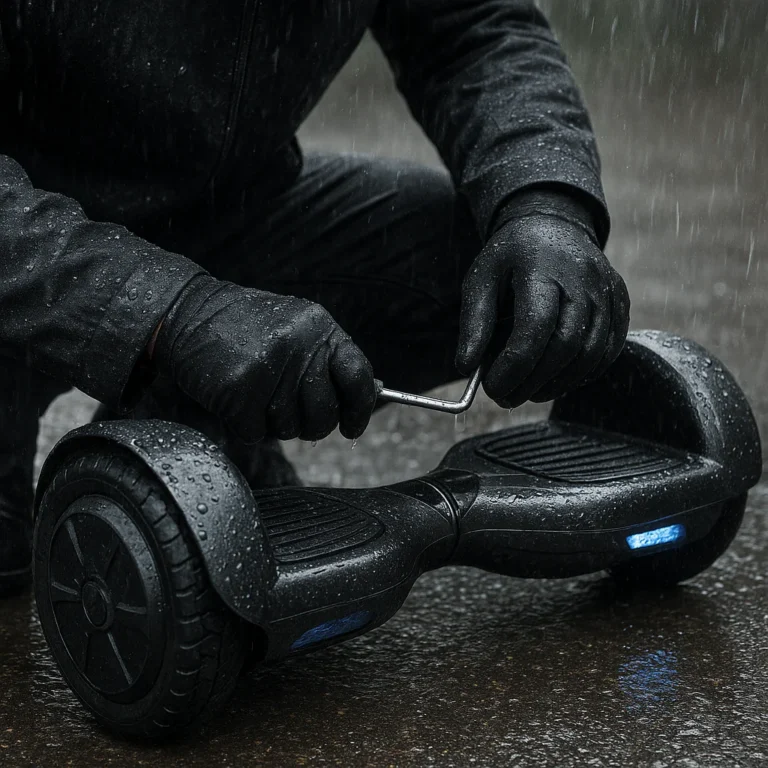
How does water damage affect hoverboard batteries? It can cause short circuits, corrosion, charging failures, and delayed battery faults—and a wet board may be unsafe even after its exterior dries. Don’t ride, switch on, or charge a hoverboard that may have water inside; follow the manufacturer’s guidance and seek qualified help after submersion, flooding, or saltwater exposure.
At Party Plan Checklist™, we’ve learned that outdoor fun can be undone by a small detail: a sprinkler, a puddle, or a drink knocked over beside the charging area. The board may look fine afterward, but “it still turns on” isn’t proof that its battery is safe.
Key Takeaways
- Water can damage the battery, wiring, connectors, and control electronics.
- Saltwater and floodwater are especially concerning because they can leave corrosive or conductive residue.
- Never charge or ride a hoverboard that may be wet inside. Dry-looking surfaces don’t confirm internal safety.
- Swelling, unusual heat, odors, leaking, hissing, smoke, or sparks are warning signs. Move away and contact emergency services if there is smoke or fire.
- After submersion or flood exposure, don’t open, repair, or dispose of the board in household trash. Contact the manufacturer, local fire department, or hazardous-waste authority for next steps.
Table of Contents
- ⚡ Quick Tips and Facts: Water Damage and Hoverboard Batteries
- 🔎 How Hoverboard Batteries Work—and Why Water Is a Risk
- Lithium-ion battery packs, BMS protection, and electrical connections
- Water-resistant versus waterproof: what hoverboard ratings mean
- 💧 How Water Damage Affects Hoverboard Batteries
- Short circuits, corrosion, and battery management system failure
- Freshwater, saltwater, rain, and floodwater: different risks
- Why damage can appear hours or days later
- 🚩 Signs a Water-Damaged Hoverboard Battery May Be Unsafe
- Swelling, unusual heat, odors, leaking, or hissing
- Charging problems, power loss, and unexpected shutdowns
- When a hoverboard should be treated as a fire risk
- 🛑 What to Do If Your Hoverboard Gets Wet
- Immediate steps after rain, a spill, or a brief splash
- What to do after submersion or flood exposure
- How to isolate a wet hoverboard safely
- 🔌 Can You Charge or Ride a Wet Hoverboard?
- Why switching it on or charging it can make damage worse
- Why drying it out does not prove it is safe
- Can you use rice, a hair dryer, or compressed air?
- 🔥 Lithium-Ion Battery Fire Risks After Water Exposure
- Why lithium-ion batteries can catch fire
- How battery fires start and what thermal runaway means
- Unique dangers: toxic smoke, reignition, and rapid heat release
- Does water on a battery fire create combustible hydrogen?
- What to do if a hoverboard battery smokes, sparks, or burns
- 🧰 Inspection, Repair, and Warranty After Water Damage
- Can a water-damaged hoverboard battery be repaired?
- Why you should not open or repair the battery pack yourself
- When to contact the manufacturer or a qualified repair professional
- Water damage, warranties, recalls, and safety certifications
- ♻️ Safe Disposal of a Water-Damaged Hoverboard
- How to handle and transport a damaged lithium-ion battery
- Where to find battery recycling and hazardous-waste services
- Why damaged batteries must not go in household trash or recycling bins
- 🌧️ Flood Preparation and Water-Damaged Electronics
- What to do before severe weather or flooding
- What to do if smaller lithium-ion devices get wet
- How to dispose of water-damaged battery-powered devices
- 🛴 Battery Safety Across Personal Electric Vehicles
- E-bikes and e-scoters after rain or flooding
- Electric vehicles and flood-exposed high-voltage batteries
- Laptops, phones, power tools, and other smaller devices
- Where to charge and store lithium-ion batteries safely
- ✅ How to Prevent Hoverboard Water Damage
- Check the manual, IP rating, and riding conditions
- Safe charging, storage, and everyday use
- Buying a hoverboard with battery safety in mind
- 📣 Battery Safety Education and Community Resources
- Fire Prevention Week and lithium-ion battery awareness
- How to help educate your household and community
- Safety tip sheets, lesson plans, and shareable resources
- ❓ Frequently Asked Questions
- Can a hoverboard battery be damaged without visible water inside?
- How long should a wet hoverboard dry before use?
- Can a water-damaged hoverboard battery explode later?
- Is a hoverboard safe after riding through a puddle?
- Can you rinse a hoverboard or clean it with water?
- Who should you call about a smoking or overheating battery?
- 🏁 Conclusion
- 🔗 Recommended Links
- 📚 Reference Links
⚡ Quick Tips and Facts: Water Damage and Hoverboard Batteries
Our first rule at Party Plan Checklist™: a wet hoverboard is not a party prop until it has been assessed as safe. If you’re planning an outdoor celebration, our guide to 🌧️ 10 All-Weather Hoverboard Maintenance Tips for Rainy Days (2026) can help you plan for drizzle—but water exposure still deserves serious attention.
| If this happens… | Do this… | Avoid this… |
|---|---|---|
| Rain or a drink splashes the board | Switch it off if safe, unplug it, and keep it out of use while you assess the exposure | Don’t ride it to “see if it still works” |
| The board is submerged, soaked, or exposed to floodwater | Keep people away, don’t charge or open it, and contact the manufacturer and local fire department for handling advice | Don’t put it in a closet, garage beside combustibles, or household trash |
| Battery is hot, swollen, leaking, hissing, smoking, or smells unusual | Move away, keep others clear, and call emergency services if there is smoke, heat, or fire | Don’t handle, puncture, or attempt to repair it |
| The board appears dry and powers on | Still don’t assume it is safe; seek manufacturer or qualified professional guidance after meaningful exposure | Don’t treat “it works” as proof the battery is undamaged |
- Water can damage more than the battery: connectors, wiring, control boards, and motors may also corode or malfunction.
- Saltwater and floodwater are especially concerning because they can leave conductive or corrosive contaminants behind.
- Never charge a wet or potentially water-damaged hoverboard. The National Fire Protection Association (NFPA) advises not to charge, open, or attempt to repair a damaged lithium-ion battery.
- A water-exposed board may develop trouble later. Dry on the outside does not mean safe on the inside.
- If it shows danger signs, prioritize people and property—not saving the board. 🚨
🔎 How Hoverboard Batteries Work—and Why Water Is a Risk
Hoverboards commonly use rechargeable lithium-ion battery packs to power their motors and electronics. The battery pack is only one part of the system: the battery management system, wiring, connectors, sensors, and control boards all need to operate correctly.
That matters at a party. We’ve seen hosts focus on keeping the board away from a drink table, then forget the damp lawn, wet shoes, sprinkler mist, or sudden shower. Water doesn’t need a dramatic plunge into a pool to create a problem; the outcome depends on how much water entered, where it went, and what contaminants it carried.
Lithium-ion battery packs, BMS protection, and electrical connections
A hoverboard battery pack contains multiple cells and protective electronics. A battery management system (BMS) helps monitor functions such as voltage and temperature, but it is not a waterproof force field. Moisture can affect connectors and circuitry, and damage to a protective component may undermine the safety systems that normally help manage the pack.
| Component | What it does | How moisture may affect it |
|---|---|---|
| Battery cells | Store and deliver electrical energy | Internal damage or cell imbalance may create abnormal heating or failure |
| Battery management system | Monitors and protects the pack | Corosion or short circuits may interfere with monitoring or protection |
| Connectors and wiring | Carry power between components | Moisture and residue can promote corrosion or unintended electrical paths |
| Control boards | Coordinate motors and other electronics | Corosion may cause errors, loss of function, or intermittent faults |
| Motors and sensors | Enable movement and balance control | Water intrusion may lead to malfunction or delayed corrosion |
These are general battery-system risks, not a diagnosis of any particular board. The exact construction and water protection vary by manufacturer and model. Check the specific product’s manual, and contact its manufacturer after significant exposure.
Water-resistant versus waterproof: what hoverboard ratings mean
An IP rating describes tested protection against particular types of dust or water exposure. It does not mean every device with a rating can be ridden through puddles, hosed down, or submerged. For example, iHoverboard’s wet-weather article describes the iHoverboard H1 as IP54-rated and explains that the water-protection digit refers to splashing—not submersion.
| Label or claim | What you should check | What not to assume |
|---|---|---|
| IP rating, such as IP54 | Manufacturer’s stated test conditions and the manual | “Waterproof in every situation” |
| “Water-resistant” | What exposure the maker actually permits | Safe operation in rain, puddles, or floodwater |
| No rating listed | Ask the manufacturer before wet-weather use | That the casing must be sealed |
| A waterproof cover | Whether it’s approved for that model and how it affects use | That it protects the battery or makes riding wet surfaces safe |
Follow the model-specific instructions, not a marketing adjective. A rating is a boundary, not an invitation to test the boundary at a birthday party.
💧 How Water Damage Affects Hoverboard Batteries
Water can create immediate electrical problems, but some damage develops over time. Depending on exposure, the board may stop working right away—or may appear normal before corrosion and intermittent faults show up later.
The NFPA’s lithium-ion battery guidance warns that physical damage can increase the risk of fire, toxic gases, or an uncontrolled release of energy. The precise risk after a particular splash can’t be determined by appearance alone.
Short circuits, corrosion, and battery management system failure
Moisture can bridge electrical contacts that are meant to remain separated. Contaminants left behind as water evaporates may also encourage corrosion. If battery-pack components or protective electronics are affected, the board could charge poorly, lose power, behave erratically, or develop a more serious safety issue.
Don’t open the pack to look for corrosion. Lithium-ion battery packs can retain dangerous energy even when a hoverboard is switched off. The NFPA advises against opening or attempting to repair a damaged battery; inspection and repair should be handled by an appropriately qualified professional.
Freshwater, saltwater, rain, and floodwater: different risks
Water exposure isn’t one-size-fits-all. The source, duration, depth, and contaminants all matter.
| Exposure | Why it needs attention | Practical response |
|---|---|---|
| Light rain or a brief splash | Water may still enter openings or connectors, depending on the model | Stop use, unplug if safe, check the manual, and contact the manufacturer if water may have entered |
| Puddle or sustained rain | Greater chance of water reaching internal parts | Don’t charge or ride until qualified guidance confirms next steps |
| Saltwater or seawater | Salt residue is corrosive and can remain after the water dries | Treat as serious exposure; don’t power it on or charge it |
| Floodwater | May contain dirt, sewage, salts, or other conductive contaminants | Keep away from people and combustibles; ask the fire department and manufacturer how to handle it |
A social-media post from IONA Fire warns that saltwater exposure can trigger corrosion. It is a short post rather than a technical assessment, so use it as a caution—not as a substitute for manufacturer or fire-service advice.
Why damage can appear hours or days later
A device can look dry while moisture or residue remains inside. Corosion and intermittent electrical faults may take time to become obvious. That delayed pattern is one reason the iHoverboard guide cautions that water-related problems may emerge well after exposure.
Here’s the unsettling part: a working display or a successful power-on test does not establish that the battery is safe to charge. After submersion, floodwater exposure, or a clear sign water entered the housing, leave the board off and get qualified guidance.
🚩 Signs a Water-Damaged Hoverboard Battery May Be Unsafe
No checklist can certify a lithium-ion pack safe from the outside. But warning signs should make the decision easy: stop using it, keep people clear, and seek help.
Swelling, unusual heat, odors, leaking, or hissing
Stop using the hoverboard if you notice:
- Swelling, bulging, or a changed shape
- Unusual or rising heat
- A sharp, chemical, or otherwise unfamiliar odor
- Leaking fluid or visible residue
- Popping, crackling, or hissing sounds
- Smoke, sparks, or a sudden color change
The NFPA lists unusual odor, excessive heat, popping, swelling, or a change in color as warning signs. Don’t lean over the device to investigate or try to move a visibly hot, smoking, or leaking unit. Get away and call emergency services if there’s smoke or fire.
Charging problems, power loss, and unexpected shutdowns
A board that won’t charge, loses power, displays errors, or shuts off unexpectedly may have a fault. Those symptoms don’t prove water damage—other failures can cause them too—but after exposure to water, they’re a clear reason not to keep testing it.
Keep a note of the model, exposure, and symptoms. The manufacturer or a repair professional may find those details useful. Don’t repeatedly plug it in to see whether the problem “fixed itself”; every test adds risk without confirming the battery is healthy.
When a hoverboard should be treated as a fire risk
Treat the situation as urgent if the board is smoking, sparking, hissing, unusually hot, or actively burning:
- Move people away and keep a clear route out.
- Don’t touch, charge, open, or carry a hazardous unit.
- Call your local emergency number if there is smoke, fire, or escalating heat.
- Follow fire-service directions; don’t attempt a risky rescue or DIY battery removal.
If there are no immediate warning signs but the board was submerged or flooded, keep it unused and contact the manufacturer and local fire department for safe handling advice. That distinction—imediate emergency versus serious exposure requiring professional guidance—helps avoid both panic and dangerous guesswork.
🛑 What to Do If Your Hoverboard Gets Wet
Your response depends on the exposure. A few drops on the shell aren’t the same as seawater inside the battery compartment, but neither should be followed by an impulsive “let’s just charge it.” Use the steps below, then follow the manufacturer’s instructions.
Immediate steps after rain, a spill, or a brief splash
- Stop riding and switch the board off if you can do so without touching a hot, damaged, or smoking unit.
- Unplug the charger if it is safe to reach. Keep your hands dry and don’t handle exposed wiring.
- Wipe only the outside with a dry cloth. Don’t rinse the board or push moisture into seams.
- Keep it away from children, pets, heaters, and combustible materials.
- Check the manual and contact the manufacturer if water may have reached openings, ports, the battery area, or electronics.
- Do not charge or ride until you have reliable guidance that addresses the exposure and model.
For hosts, this is the point where the hoverboard disappears from the entertainment plan. Switch to a dry-ground activity instead—our birthday party checklist is much easier to follow when the main attraction isn’t an electrical question mark. 🎈
What to do after submersion or flood exposure
If the hoverboard was submerged, soaked by floodwater, or exposed to seawater:
- Do not power it on, charge it, open it, or attempt a repair.
- Keep people away and do not carry it if it is hot, swollen, leaking, hissing, smoking, or otherwise unsafe to handle.
- Contact the manufacturer and local fire department for specific handling and disposal advice.
- Ask the local waste authority how to arrange safe disposal if the board is not recoverable.
- Keep it away from living areas and combustibles while awaiting professional instructions. Don’t improvise a storage container or leave a suspect battery unattended in an occupied space.
The NFPA’s guidance for potentially damaged batteries includes disconnecting from the charger, using a non-combustible container, and storing outside the building. Because moving a damaged battery can itself be hazardous, ask your fire department or manufacturer how to apply that advice safely in your situation. Don’t move a smoking, hot, or leaking device.
How to isolate a wet hoverboard safely
“Isolation” means preventing accidental use and keeping people away—not dismantling the device or improvising a dangerous transport plan.
- Tell household members and guests not touch or charge it.
- Keep it away from exits, children, pets, and things that can burn, if it can be left undisturbed safely.
- Don’t place it beside a furnace, radiator, stove, or other heat source.
- If it is showing warning signs, evacuate the immediate area and call emergency services.
- For a submerged or flood-damaged board without immediate warning signs, ask the manufacturer or fire department what to do next.
🔌 Can You Charge or Ride a Wet Hoverboard?
No—not if the hoverboard may be wet internally or has been exposed to submersion or floodwater. Don’t charge it, ride it, or power it on just to check. The NFPA says not to charge damaged lithium-ion batteries, and a powered-on test cannot rule out internal corrosion or battery damage.
Why switching it on or charging it can make damage worse
Powering a wet or damaged device may create electrical faults or stress compromised components. Charging adds another electrical process to a system whose condition is unknown. That is why “just one quick test” is a bad bargain: it offers little useful information and could make the situation more dangerous.
Why drying it out does not prove it is safe
A dry outer shell doesn’t tell you what happened inside the casing. Moisture and mineral or salt residue may remain around cells, connectors, or circuit boards. Even if the board appears to work, it may have delayed faults.
After a significant exposure, rely on manufacturer guidance or a qualified professional’s assessment, not a calendar-based drying rule. We can’t responsibly promise that a certain number of hours or days makes a wet lithium-ion pack safe.
Can you use rice, a hair dryer, or compressed air?
We don’t recommend DIY “rescue tricks” for a wet hoverboard battery.
- ❌ Rice: It cannot establish that internal components are dry or undamaged.
- ❌ Hair dryer, heater, or direct sun: Heat can add stress and won’t verify battery safety.
- ❌ Compressed air: It may push water or debris farther into openings.
- ❌ Opening the casing: This can expose hazardous battery components and may worsen damage.
For a minor exterior splash, wipe the outside and consult the manual. For internal water exposure, ask the manufacturer what to do.
🔥 Lithium-Ion Battery Fire Risks After Water Exposure
Water exposure does not mean a hoverboard will definitely catch fire. But damage to a lithium-ion battery can create serious risks, and neither a dry exterior normal operation can rule them out. The sensible response is measured: don’t panic, but don’t charge or use a potentially damaged pack.
Why lithium-ion batteries can catch fire
Lithium-ion batteries store substantial energy in a compact space. If a cell is damaged or fails, it can heat rapidly and trigger thermal runaway, a chain reaction in which heat from one cell contributes to failure in nearby cells. The U.S. Consumer Product Safety Commission (CPSC) and fire-safety authorities publish battery-safety advice; the NFPA’s lithium-ion resources specifically warn about fire and toxic-gas hazards from damaged batteries.
A wet board isn’t automatically in thermal runaway. But if water has damaged the pack or its protective electronics, a later fault is one reason not to “test” it by charging.
How battery fires start and what thermal runaway means
A battery fire can follow internal damage, an electrical short, overheating, or other cell failure. Once thermal runaway begins, heat and gases can spread the event from cell to cell. The user may hear popping or hissing, see swelling or smoke, or notice intense heat—but don’t wait for every warning sign before moving away.
The key advice is straightforward: if a battery is smoking or burning, leave the area and call emergency services. Don’t dismantle it or try to carry it outdoors.
Unique dangers: toxic smoke, reignition, and rapid heat release
Lithium-ion battery incidents may produce toxic smoke, intense heat, and the risk of reignition after the visible flames have stopped. That makes a garage, hallway, party room, or crowded venue a poor place to gamble on an uncertain battery.
For an event, keep damaged or suspect hoverboards away from guests and escape routes. For venue planning and safe logistics, our event venue selection resources and event management software category can help organize practical safety responsibilities—but software cannot replace fire-service guidance. 🔥
Does water on a battery fire create combustible hydrogen?
This question causes understandable confusion. A lithium-ion battery is not the same thing as a piece of pure lithium metal. The NFPA explains that lithium-ion batteries use lithium salts and that “lithium salts are non-reactive with water”.
That doesn’t make a battery fire safe to tackle yourself. Firefighters may use water as part of their response to cool a lithium-ion battery fire, but the correct action for a bystander is to evacuate and call emergency services, not to test a homemade theory about hydrogen or choose an improvised extinguishing method.
What to do if a hoverboard battery smokes, sparks, or burns
- Get everyone away from the board and alert others nearby.
- Leave the area if there is smoke, fire, hissing, or intense heat.
- Call emergency services and describe it as a lithium-ion battery or hoverboard fire.
- Don’t touch, carry, charge, puncture, or disassemble it.
- Follow responders’ instructions and keep people away afterward; don’t assume a battery is safe because visible flames have stopped.
🧰 Inspection, Repair, and Warranty After Water Damage
Water exposure can affect multiple systems, so the battery may not be the only repair question. A professional may need to assess the battery pack, charging port, wiring, sensors, controller, and motors. A quick power-on test is not a professional inspection.
Can a water-damaged hoverboard battery be repaired?
Sometimes a qualified service professional may be able to assess or replace affected parts, but a submerged or flood-exposed battery may be unsafe or uneconomical to repair. The answer depends on the model, damage, parts availability, and manufacturer policy.
Ask the manufacturer:
- Is there an authorized service center for this model?
- Should the complete board or battery pack be replaced?
- How should it be stored or transported while awaiting assessment?
- What disposal route is appropriate if repair is not recommended?
Why you should not open or repair the battery pack yourself
A battery pack can remain energized even when the hoverboard is switched off. Opening it may expose cells, wiring, or damaged protective electronics to further harm. The NFPA recommends against opening or attempting to repair a damaged lithium-ion battery.
DIY videos can show how components look, but a visual demonstration is not a safe repair procedure. For example, a video documenting a seawater-damaged hoverboard battery shows visible corrosion and disintegration in the pack and circuit board. Its dramatic “SEA WATER HAS DESTROYED THE BATERY!” summary illustrates why saltwater is alarming—not why viewers should try taking a battery apart.
When to contact the manufacturer or a qualified repair professional
Contact the maker or a qualified service professional if water entered the board, it was submerged, it experienced saltwater or flood exposure, or it now behaves unusually. Share the model and exposure details, but don’t ship or carry a potentially damaged battery unless the manufacturer or relevant authority tells you how to do so safely.
If the board is hot, swollen, leaking, hissing, smoking, or sparking, don’t wait for routine support. Move away and call emergency services.
Water damage, warranties, recalls, and safety certifications
Water damage may be excluded from warranty coverage; check the terms for your exact model rather than assuming. Also check for recalls and certification information through the CPSC recall search and the manufacturer’s official support pages.
A recognized certification can provide useful context about product testing, but it does not guarantee that a water-damaged board remains safe. Keep the manual, purchase record, model number, and exposure notes together—useful paperwork when you’re trying to solve a problem without turning the support call into a scavenger hunt.
♻️ Safe Disposal of a Water-Damaged Hoverboard
Do not place a hoverboard battery or battery-powered device in household trash or curbside recycling. Damaged lithium-ion batteries can cause fires during collection, transport, or processing. The U.S. Environmental Protection Agency (EPA) explains that lithium batteries should be handled through appropriate recycling and disposal routes.
How to handle and transport a damaged lithium-ion battery
Don’t assume a damaged board can be safely driven to a recycling center. Contact the manufacturer, local fire department, or local hazardous-waste authority first. Tell them whether it was submerged, exposed to saltwater or floodwater, or showing heat, swelling, leakage, or smoke.
If it is hot, smoking, leaking, hissing, or otherwise hazardous, don’t handle or transport it yourself. Follow emergency-service instructions.
Where to find battery recycling and hazardous-waste services
For a board that is not showing immediate danger signs, start with:
- The hoverboard manufacturer’s support or battery-disposal instructions.
- Your local household hazardous-waste program.
- Your fire department or local waste authority, especially for a damaged or flooded pack.
- The EPA’s guidance on used household batteries and recycling.
Call ahead. Not every collection site accepts large, damaged, or water-exposed lithium-ion batteries.
Why damaged batteries must not go in household trash or recycling bins
Batteries can be crushed or damaged in waste trucks and sorting facilities, potentially causing fires. A normal recycling bin is not a safe shortcut for a suspect hoverboard battery. Ask for an approved route and clearly disclose the water exposure.
🌧️ Flood Preparation and Water-Damaged Electronics
Flood planning is not glamorous—until a storm turns the garage into a very inconvenient swimming pool. A little preparation can keep battery-powered devices out of the water and make decisions easier when the forecast gets serious.
What to do before severe weather or flooding
If local officials warn of flooding:
- Move hoverboards and other battery-powered devices to a dry, higher location before water rises.
- Keep chargers and devices away from doors, floor drains, and known flood-prone areas.
- Don’t store a device near an exit if moving it later could expose someone to floodwater.
- Follow local emergency instructions; people come before gadgets.
- Keep model numbers and manufacturer support details accessible.
For event hosts managing weather contingencies, our corporate event planning and budget party planning resources can help you plan a sensible backup venue or activity.
What to do if smaller lithium-ion devices get wet
For phones, laptops, power tools, and other smaller devices, follow the same core principle: don’t charge or switch on a device that may be wet inside. Disconnect it from power only if that can be done safely, and consult the manufacturer for model-specific advice.
A flooded device isn’t automatically safe because it is small. If its battery is swollen, hot, leaking, smoking, or making noises, keep away and seek emergency help where appropriate.
How to dispose of water-damaged battery-powered devices
Don’t put a water-damaged battery-powered device in household garbage or curbside recycling. Ask your local hazardous-waste program, fire department, or the device manufacturer where it can be handled safely. Tell the receiving service that the device was water-exposed and whether the battery shows any warning signs.
🛴 Battery Safety Across Personal Electric Vehicles
The advice here applies broadly to personal electric vehicles: water exposure can affect batteries, controls, and connectors, but the correct response depends on the device’s design and the manufacturer’s instructions. A hoverboard’s splash rating doesn’t automatically apply to an e-bike, scooter, or car.
E-bikes and e-scoters after rain or flooding
Don’t charge an e-bike or e-scoter after submersion or flood exposure until the manufacturer or qualified service provider has assessed what to do. Check the manual for the actual weather limits; don’t infer safety from another product’s rating.
For general battery-safety reminders, the NFPA lithium-ion battery resource covers warning signs and safe practices beyond hoverboards.
Electric vehicles and flood-exposed high-voltage batteries
If an electric vehicle has been flooded, follow vehicle-manufacturer and emergency-service instructions. Don’t touch damaged high-voltage components or attempt to charge or start a vehicle that may have water-damaged electrical systems. The National Highway Traffic Safety Administration (NHTSA) provides electric-vehicle safety information; consult the vehicle maker for model-specific flood guidance.
Laptops, phones, power tools, and other smaller devices
The basic rules remain: don’t charge a potentially wet device, don’t open its battery pack, and don’t dispose of it in household waste. Follow the product manual and local battery-disposal instructions. A device that powers on is not necessarily undamaged.
Where to charge and store lithium-ion batteries safely
For a healthy, undamaged device, use the manufacturer-approved charger and follow its instructions. Charge and store batteries away from exits, heat sources, and combustible clutter, and don’t leave charging devices unattended where people can’t notice a problem.
For a device exposed to water, those ordinary charging tips no longer settle the question: don’t charge it until the manufacturer or a qualified professional has advised you.
✅ How to Prevent Hoverboard Water Damage
Prevention is less exciting than a hoverboard race, but it’s a lot easier to explain to your venue manager. Our party-planning rule: keep the ride area dry, keep drinks elsewhere, and have a backup activity ready.
Check the manual, IP rating, and riding conditions
Before riding outdoors:
- Find the exact model and read its manual.
- Check whether the manufacturer specifies an IP rating and what that rating means for use.
- Avoid rain, puddles, wet pavement, sprinklers, and any conditions the manual prohibits.
- Don’t interpret “water-resistant” as “safe to submerge.”
- Ask the manufacturer if the rating or weather guidance is unclear.
The iHoverboard guide makes the same practical distinction: a splash-protection rating is not permission for heavy exposure or submersion.
Safe charging, storage, and everyday use
- Charge only with the charger specified by the manufacturer.
- Keep the hoverboard and charger dry and away from heat and combustible clutter.
- Don’t charge a board that has been wet, dropped, damaged, or behaving unusually until you’ve received proper guidance.
- Store it indoors in a dry place, following the manual.
- Check occasionally for swelling, damage, unusual odor, or heat.
Buying a hoverboard with battery safety in mind
Before buying, check the manufacturer’s support, manual, stated water-protection rating, warranty terms, and recall information. Look for clear guidance on charging, storage, repairs, and battery disposal. A vague “all-weather” claim should prompt more questions, not a celebratory cart click.
📣 Battery Safety Education and Community Resources
A simple safety briefing can prevent a guest from charging a damp board “to be helpful.” For an event, tell helpers where devices may be used, where chargers belong, and who to contact if a battery looks damaged.
Fire Prevention Week and lithium-ion battery awareness
Use NFPA fire-safety resources and local fire-department materials to share battery safety information with families and event teams. Keep guidance short and actionable: don’t charge damaged batteries, watch for warning signs, and call for help when there’s smoke or fire.
How to help educate your household and community
- Add a battery-safety note to the household or event checklist.
- Tell guests not to ride or charge a wet hoverboard.
- Make sure helpers know how to contact the venue manager or emergency services.
- Share the manufacturer’s manual and local disposal information with the person responsible for equipment.
It’s the same logic we use in party planning: assign a person, not just a vague task. “Someone watch the chargers” is less useful than “Jordan keeps chargers in the dry equipment area and flags any unusual heat.”
Safety tip sheets, lesson plans, and shareable resources
Useful starting points include:
- NFPA lithium-ion battery safety
- EPA used household battery guidance
- CPSC recalls and safety information
- The hoverboard’s official manual and support page
❓ Frequently Asked Questions
Can water-damaged hoverboard batteries catch fire during a party?
They can pose a fire risk, but water damage does not mean a fire will definitely occur. A battery with warning signs—or one known to have been submerged—should not be charged or used around guests. The NFPA identifies fire and toxic-gas risks from damaged lithium-ion batteries.
What should a host do if the board was only splashed?
Stop using it, unplug it if safe, and follow the model’s manual or manufacturer guidance. If it’s hot, swollen, leaking, hissing, smoking, or sparking, move people away and contact emergency services as appropriate.
How can you tell if a hoverboard battery has water damage?
You may notice power or charging problems, corrosion, unusual heat, swelling, leakage, odor, or sounds. But there may be no visible sign, especially if water is inside the casing. After submersion or flood exposure, treat it as potentially damaged even if it looks normal.
Can a multimeter or power-on test prove it’s safe?
No. A basic reading or successful power-on cannot certify that the battery cells and protective electronics are undamaged. Don’t open or test a suspect pack yourself.
Is it safe to charge a hoverboard after it gets wet?
Not if it may be wet inside or has been submerged, flooded, or exposed to saltwater. Don’t charge or power it on until the manufacturer or an appropriately qualified professional has advised you. The NFPA says not to charge a damaged lithium-ion battery.
What if the exterior is dry now?
Dry casing does not show whether internal parts are dry or free of corrosion. Get advice based on the exposure and specific model.
How should you store a hoverboard battery before a party?
Store an undamaged hoverboard in a dry place, away from heat, water, and combustible clutter, and follow the manufacturer’s manual. Keep chargers and devices out of guest traffic and away from drink tables. Do not bring a water-damaged or suspect battery into an event space.
What if the hoverboard became wet during the party?
Take it out of use, don’t charge it, and keep guests away. If it shows danger signs, move away and call emergency services; otherwise, contact the manufacturer or fire department for guidance.
Can water damage make a hoverboard stop working suddenly?
Yes. Water or corrosion may affect the battery, connectors, controller, or motor systems, leading to power loss or shutdown. Problems can also appear later rather than immediately. A sudden failure after exposure is a reason to stop using and charging the board, not to reset it and try again.
What safety checks should you add to a party checklist for hoverboards?
Add these checks before guests arrive:
- Confirm the manual permits the planned conditions and riding area.
- Keep the course dry, clear, and away from sprinklers, puddles, and beverage stations.
- Inspect the board for visible damage, swelling, leakage, unusual odor, or heat.
- Use only the manufacturer-specified charger, in a dry designated area.
- Tell guests not to ride or charge a wet or damaged board.
- Name an adult responsible for stopping use if anything seems wrong.
- Keep a backup activity ready, because a hoverboard-free party is still a party.
What if there is no dry riding area?
Skip the hoverboard activity. Wet pavement increases the chance of a fall, and a weather-dependent ride is not worth putting guests or equipment at risk.
When should you replace a water-damaged hoverboard battery?
Replace it—or the whole board if advised—when the manufacturer or qualified repair professional determines it is damaged, unsafe, or not repairable. Don’t make that decision by appearance alone, and don’t keep using a battery just because it still powers on.
Should a submerged battery be sent back or recycled?
Ask the manufacturer, fire department, or local hazardous-waste authority how to handle it. Don’t ship or transport a damaged battery without specific instructions, and never put it in household trash or curbside recycling.